Building Physical AI ventures at e-Novia Investor Day
How e-Novia’s Physical AI Investor Day connected startups with investors and industry...

The EU AI Act is the European regulation that sets rules for the development and use of artificial intelligence systems in the European Union. For companies, the real question is not only what the regulation says. The real question is when it becomes relevant, which AI projects need more attention, and how to keep innovating without building systems that are hard to control later.
The regulation is based on a simple principle. The more an AI system can affect people, safety, rights, or access to essential services, the more it needs to be designed, documented, and monitored with care. Not all AI applications will have the same level of obligation. An internal assistant used to improve productivity is not the same as a system that supports HR decisions, controls a safety component, or helps manage an industrial process.
This distinction matters for business leaders. The EU AI Act does not ask companies to stop AI projects. It asks them to build these projects with clearer AI governance from the start. This means starting from the use case, understanding the real impact of the technology, assigning responsibilities, and designing controls that match the level of risk.
For this reason, AI governance is becoming a core business capability. It is not a formal layer to add at the end of a project. It is the way to avoid fragmented AI adoption, unclear ownership, and weak links between technology, data, processes, and business goals.
The EU AI Act creates a common framework for artificial intelligence in Europe. Its logic is risk-based. It does not regulate AI only as a technology. It regulates how AI is used and the impact it may create.
This reflects a clear European choice. As AI moves fast, the European Union has decided to define a perimeter of responsibility early. The goal is to build trust in AI systems and reduce the most relevant risks for people, companies, and society.
For companies, this has two direct effects. First, AI compliance cannot be checked only at the end of a project, when the system has already been developed or integrated. Second, the EU AI Act does not only affect companies that build AI models. It may also affect companies that buy, integrate, modify, or use AI systems in products, processes, or services.
The official European Parliament overview of the EU AI Act explains the same core idea: rules change according to the level of risk and the role of the actors involved.
The EU AI Act applies in phases. Some parts are already in force, while others depend on later deadlines, technical standards, guidelines, and implementation practices that are still developing. This is why many companies have not yet seen a major change in their daily AI operations.
This does not mean the topic can be postponed. It means companies now have a useful window to prepare with method. AI projects that today are proofs of concept or internal tests can quickly become products, core processes, or commercial services. If governance, data, responsibilities, and traceability are added only at the end, every correction becomes more expensive.
The public debate around the EU AI Act reflects this tension. On one side, regulation can build trust and make AI adoption safer. On the other, many companies worry that unclear or heavy requirements could slow investment and innovation, especially for startups, SMEs, and deep tech companies.
For decision makers, the most useful view is balanced. The EU AI Act should be seen as a clear regulatory direction, not as a final checklist for every possible AI application. The best move is not to wait until every detail is settled. It is to start designing AI projects in a way that is stronger, easier to document, and aligned with the level of risk.
A common mistake is to think that the EU AI Act only concerns Big Tech. In reality, many companies may fall within its scope even if they do not develop their own AI models.
A company may be involved because it develops an AI system and places it on the market. It may be involved because it integrates AI into a product or service. It may be involved because it uses a third-party solution in an important business process. It may also become responsible if it changes an existing AI solution or changes the purpose for which it is used.

The right question is not simply “are we using AI?”. A better question is “what does this system do, where does it operate, and what effect can it have?”.
A model that suggests text for a marketing campaign has limited impact. A system that supports hiring, evaluates credit risk, controls a production process, or enables a safety function needs a much deeper review. The technology may look similar, but the risk depends on the context.
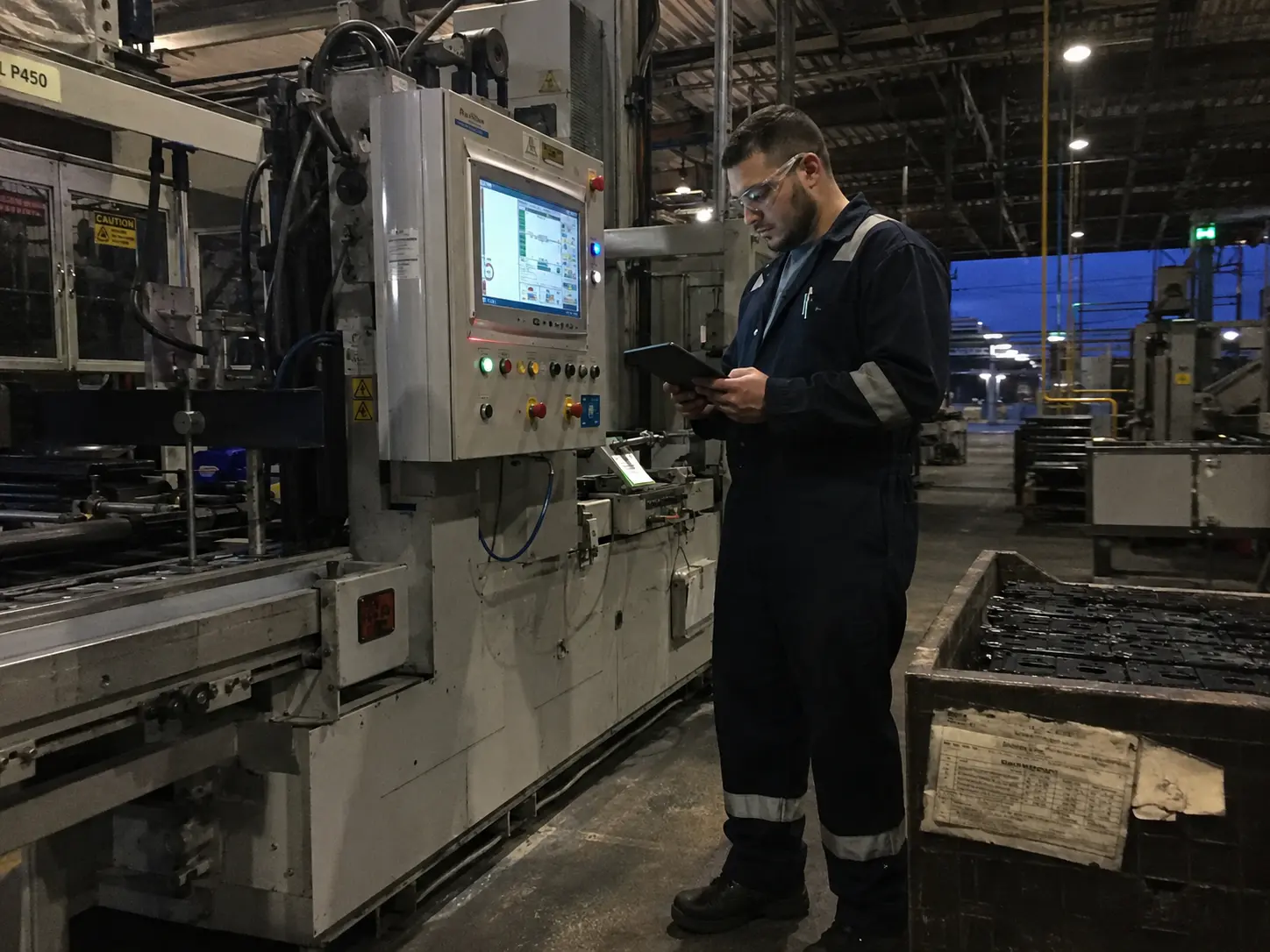
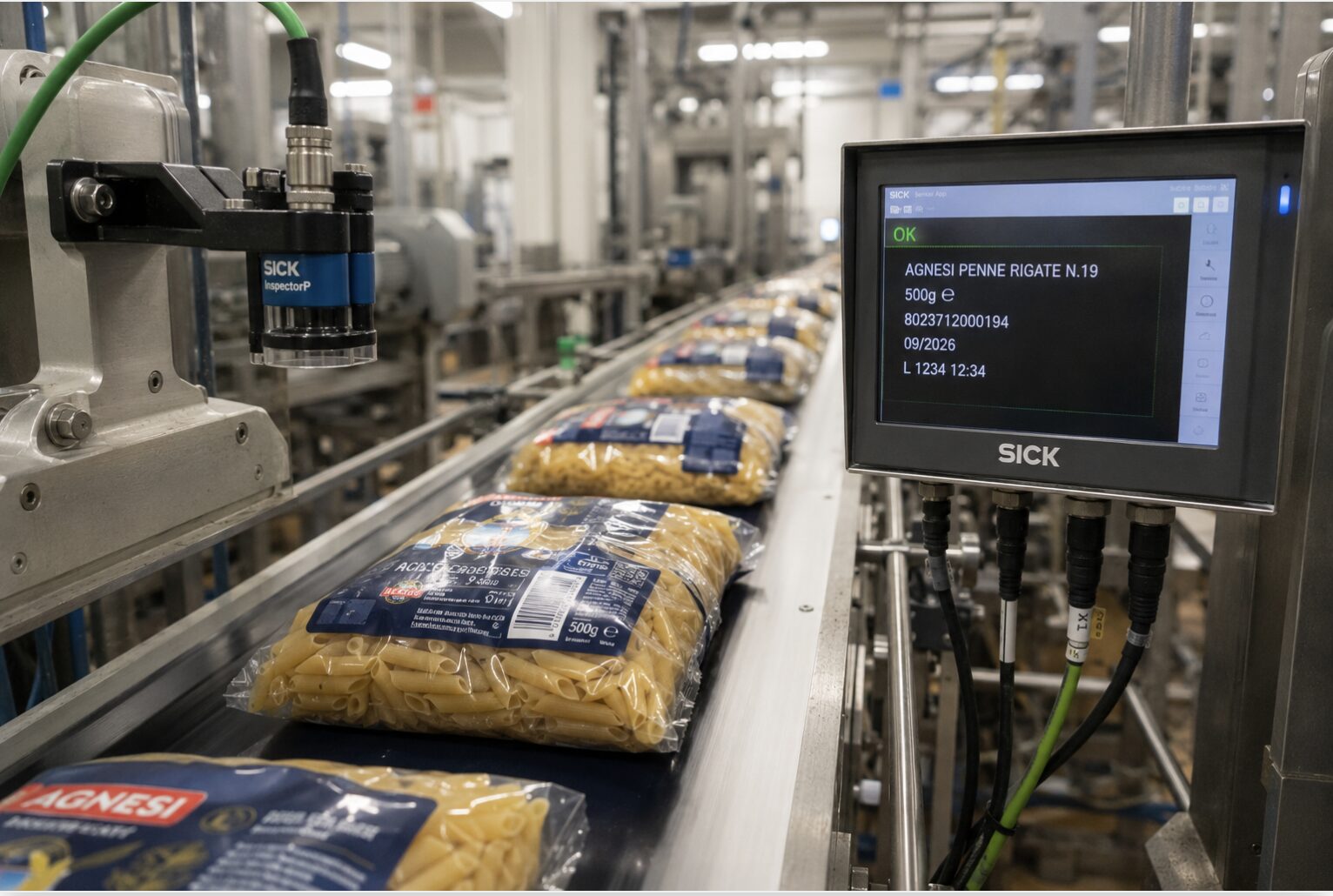
This logic is especially important for industrial AI applications. When AI enters products, machines, or physical processes, it does not only produce digital outputs. It can influence performance, safety, operational continuity, and the experience of users and operators.
The EU AI Act divides AI systems into risk categories. For companies, this risk classification is the first practical step, because it defines the level of governance, documentation, and control that is needed.
Unacceptable-risk systems are prohibited. This category includes practices such as social scoring (rating people based on behavior), harmful manipulation (pushing people toward choices that may damage them), exploitation of vulnerabilities (targeting children or vulnerable people), and some highly invasive biometric uses, such as real-time identification in public spaces for law enforcement, except in very specific cases.
High-risk AI systems are the most relevant area for many organizations. These are systems that may affect health, safety, or fundamental rights, or AI systems integrated into products that are already subject to safety rules. Typical examples include tools for employment, systems used in critical infrastructure, solutions for access to essential services, biometric applications, and AI components in regulated industrial products.
Some systems mainly create transparency obligations. In these cases, users must clearly understand that AI is involved. A chatbot should make it clear that the person is interacting with a machine. A deepfake, meaning realistic content generated or changed by AI, should be recognizable as artificial. With generative AI, transparency helps protect trust and allows people to judge content correctly.
Most everyday AI uses will remain minimal or low risk. Still, internal rules remain useful, especially when AI tools are adopted at scale. A clear company policy on data, approved tools, and responsibilities helps prevent innovation from becoming a collection of unmanaged initiatives.
When a system is high risk, it is not enough to show that it works. A company must be able to show that the system has been designed, tested, and monitored in a way that matches its potential impact.

In practical terms, the company needs to consider several key elements: data quality, risk management, technical documentation, traceability, clear information for users, human oversight, accuracy, robustness, and cybersecurity. These are not separate compliance tasks. They are design dimensions that affect the quality of the whole system.
For decision makers, the key is to ask these questions early, during the concept phase. What data do we really need? Which decisions will the system influence? Who can intervene if the result is unusual? How are relevant events recorded? What does the user need to know? How will the system be monitored over time?
These questions are not only useful to reduce regulatory risk. They help companies build reliable AI solutions that users can adopt with confidence and that can scale more easily.
The best way to manage the EU AI Act is not to turn every AI initiative into a legal project. It is to add the right governance choices into the innovation process, with more control as the impact of the system grows.
The first step is to start from the use case. An AI project should begin with a clear business need: improving quality, reducing downtime, supporting operators, creating a new service, or making a product more intelligent. When the need is clear, it is easier to understand which data is required, who will use the system, and what risk the output may create.
The second step is to define the company’s role. Developing an AI system, buying it from a supplier, integrating it into a product, or changing its purpose are not the same situation. Understanding the company’s role helps manage internal responsibilities, partner contracts, and the documentation that may be needed.
The third step is to build proportionate governance. Companies do not need complex structures for every experiment. But they do need to know which AI projects are active, who owns them, which data they use, which processes they affect, and how they can move from proof of concept to production.
The fourth step is to design controls together with the solution. For more relevant projects, traceability, human oversight, security, documentation, and monitoring should not be added at the end. They should be part of the system design, together with the technical architecture and the user experience.
The fifth step is to validate the system in its real context. A model can perform well in tests and behave differently when it meets incomplete data, different operators, changing conditions, or non-standard processes. Validation must therefore consider how the solution will be used in real operations.
This approach helps companies move forward without slowing innovation. Governance grows with project maturity. The closer a system gets to the market, to production, or to sensitive decisions, the more it must be documented, controlled, and monitored.
The EU AI Act becomes especially relevant when artificial intelligence enters the design of new products and services. In these cases, compliance is not a step after development. It is a variable to consider together with performance, user experience, safety, industrialization, and the business model.
In AI-based product innovation, value does not come from adding an algorithm to an existing solution. It comes from connecting a business need, technical feasibility, user experience, and industrial scalability. In this path, the principles of the EU AI Act can be useful. They help define the intended use of the system, its limits, its responsibilities, and the conditions for bringing it to market.
This matters for companies. Many AI projects do not fail because the technology is not advanced enough. They fail because the use case is unclear, the data is not good enough, process integration is underestimated, or user adoption has not been designed. Well-built governance reduces these risks and makes innovation more concrete.
When AI enters the physical world, the topic becomes even more concrete. An AI system integrated into a machine, a vehicle, a connected device, or a production process does not only generate a recommendation. It can influence how a product behaves, support an operator, predict a failure, or act on an operating sequence.
This is the field of Physical AI, where software, algorithms, sensors, and physical systems work together. Here, it is not enough to ask whether the model is accurate. Companies must understand whether the system is reliable in real conditions, whether it can be supervised, whether it records relevant events, whether it communicates clearly with users, and whether it can be updated without affecting safety or continuity.
These are technical choices, but they are also governance choices. They define how the system is designed, validated, used, and improved over time. For this reason, in Physical AI applications, the EU AI Act should not be seen as a topic outside the project. It is part of the context in which an intelligent product must become reliable, usable, and scalable.
The EU AI Act applies gradually. The regulation entered into force on 1 August 2024. From 2 February 2025, prohibitions on unacceptable-risk practices and AI literacy obligations apply. AI literacy means ensuring that people who use or manage AI systems have the right level of knowledge. From 2 August 2025, governance rules and obligations for general-purpose AI models, often called GPAI models, apply. These are models that can perform many different tasks, such as large generative models.
The broader framework applies in phases, with specific transition periods for some high-risk systems. For this reason, companies should monitor official sources and update their choices over time.
For companies, the deadline should not be the moment to start. It should be the moment to be ready. Mapping use cases, clarifying roles, preparing documentation, and building technical controls takes time, especially when AI is integrated into products, industrial processes, or physical systems.
The EU AI Act comes from an important choice. Europe was the first major economic area to create a broad regulatory framework for a technology that will shape the next decades. This is a positive step. Artificial intelligence will have a growing impact on products, services, work, infrastructure, and decision-making systems. Regulation can create trust, protect people and companies, and make the space for innovation clearer.
At the same time, this regulatory leadership must become an advantage, not a barrier. Europe and European companies cannot afford to lose ground in AI adoption, especially when artificial intelligence enters the physical world: industrial products, machines, mobility, energy, manufacturing, connected devices, and production processes.
European competitiveness will not depend only on the ability to develop AI models. It will depend on the ability to integrate them into real and scalable systems. European rules should support and protect this transition. They should help companies build safer, more transparent, and more governable solutions, without slowing experimentation or the path from idea to market.
For companies, the challenge is to turn this regulatory direction into a working method. This means starting early, choosing high-value use cases, assessing risk in a proportionate way, designing controls from the beginning, and bringing AI into products and processes with an industrial mindset. In this scenario, compliance is not the final goal. It is a condition for better innovation, with more trust from customers, partners, and the market.
Discover how e-Novia supports companies and researchers in adopting AI and Physical AI technologies, from governance to the design of new intelligent products.