Urban Mobility Data: Why the Right Data Matters More Than the Volume
At Milan’s MOBIDAYS, Blimp shares how data helps identify where to act on urban...

Medtech brings together technologies, devices, software and systems designed to solve real healthcare needs. It can take the form of a diagnostic device, a monitoring platform, a laboratory automation system or an advanced prosthetic solution. In every case, the core challenge is the same. A clinical or operational need must become a solution that is reliable, testable and ready to be integrated.
Today, Medtech goes far beyond the traditional medical device. It increasingly includes sensors, artificial intelligence algorithms, embedded components, digital interfaces and data platforms. Value does not come from technology alone. It comes from the ability to design systems that work in complex environments, where technical, regulatory and organizational constraints must be managed from the beginning.
For companies, research centers and industrial partners, Medtech is a high impact field of innovation. It requires multidisciplinary expertise and a structured method that connects need analysis, feasibility assessment, product design, prototyping, testing and adoption.
The term Medtech refers to technologies developed to support prevention, diagnosis, treatment, monitoring and continuity of care. Within the broader field of health technology, it includes a wide range of solutions designed to improve quality of life and make healthcare systems more effective.
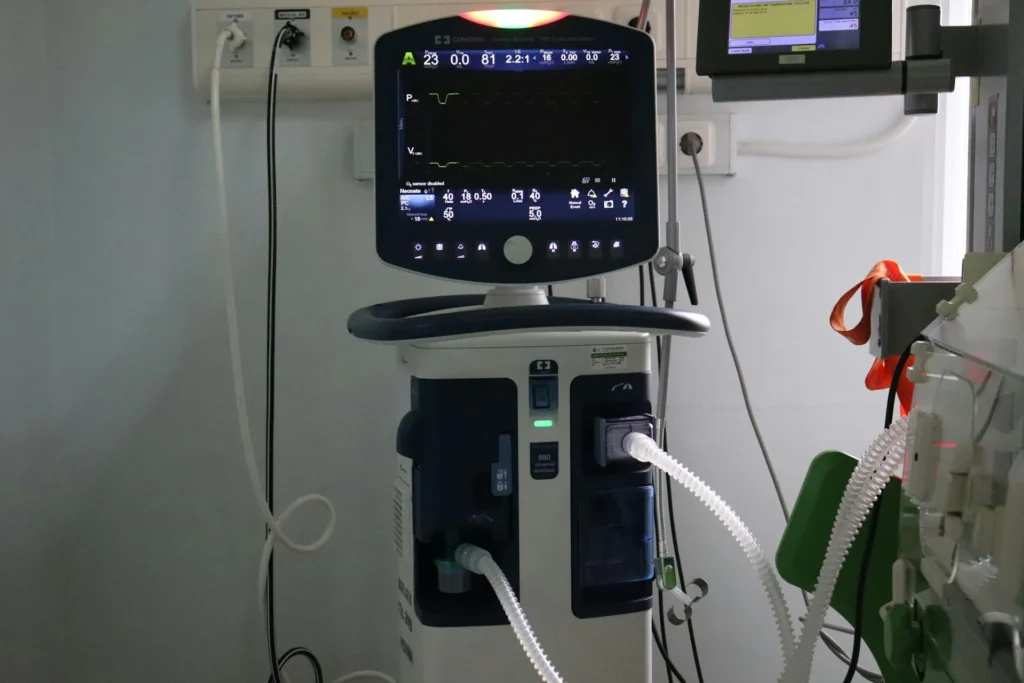
A Medtech system can be physical, digital or hybrid. It may include hardware, software, firmware, sensors, connectivity and data analytics tools. The most useful distinction is not between simple and advanced technology. It is between solutions that remain prototypes and solutions that can enter real healthcare workflows.
In healthcare, this transition is especially delicate. A technology must be designed for clinicians, operators, patients and caregivers. It also needs to interact with existing infrastructure, clinical procedures and safety requirements. This is why Medtech development must be shaped around the real context of use, not only around technical performance.
The growth of Medtech is driven by concrete operational needs. Healthcare systems are facing rising demand for diagnosis, monitoring and long term care, often with limited resources and processes that were not designed to scale. This creates pressure on response times, service quality, data traceability and economic sustainability.
Technology creates value when it reduces complexity or enables a more efficient way to deliver care. A remote monitoring system can ease recurring activities. An intelligent device can collect data that supports more timely decisions. A laboratory automation system can improve repeatability and process control.
The EY Pulse of the MedTech Industry Report 2025 confirms the strength of the global sector. According to the report, the Medtech industry reached US$584 billion in revenue in 2025, with commercial leaders targeting 6 to 7 percent growth. This confirms that Medtech is not only a research field. It is a mature industrial market where product development, validation and go to market capabilities are becoming competitive factors.
For companies, the question is not how to add technology to healthcare in a generic way. The real question is where a solution improves a process, reduces operational risk, makes a service more accessible or creates measurable value for the organization adopting it.
In Medtech, artificial intelligence becomes useful when it works on reliable data and clearly defined use cases. An algorithm can support the analysis of images, signals or behaviors, but the quality of the outcome also depends on how those data are collected.
This is why the integration of sensors and AI is becoming one of the most relevant development areas. Sensors measure parameters, actions or usage conditions. AI can interpret patterns, detect anomalies and support decisions. The physical product becomes a point of data collection, processing and useful feedback.
In Medtech, this integration can generate significant value because it affects quality of care, continuity of monitoring and the efficiency of clinical processes. The aim is to design solutions that increase reliability, accessibility and the quality of the healthcare experience without adding unnecessary complexity to clinical workflows or to the industrial processes behind them.
Achieving this requires practical engineering work. Teams need to define requirements, select components, validate prototypes, test user interaction and verify integration with existing workflows. Without this discipline, even a promising technology can remain far from adoption.
An effective Medtech solution starts with a precise question. What problem must it solve, and for whom? The answer cannot be purely technical. It must consider the healthcare need, the usage environment, operational constraints and the adoption model.
The first step is need definition. This phase clarifies users, context, pain points and minimum requirements. It helps avoid the development of unnecessary technology.
The next step is technology feasibility assessment. This is where sensors, components, algorithms, materials or software architectures are evaluated against the use case. The goal is to reduce risk before moving into development and prototyping.
The following phase is the functional prototype. Hardware, software and interface need to be tested progressively. A prototype does not only prove that a solution works. It helps teams understand how to improve it, which constraints emerge and which choices are sustainable before scale up.
In Medtech, the roadmap from prototype to product also requires an integrated view of validation, industrialization, partnerships and market access. This is where research becomes applied innovation.
In the Medtech field, e-Novia has worked on projects that show how healthcare innovation can start from very different needs. Some focus on technology compatibility in hospitals. Others address R&D process automation or therapeutic support for chronic patients.
In a hospital trial, the first question is not only whether a technology works. The right question is whether it can be introduced into a department without creating interruptions, inefficiencies or unsustainable workloads.
A technology compatibility study helps verify integration into clinical workflows, operational requirements, technical conditions and the impact on the people involved. In a hospital setting, even a high potential solution must deal with spaces, timing, procedures and responsibilities that are already defined.
The value of this approach lies in risk reduction. Before committing to a larger investment, a company can understand whether the solution fits the real context and which adaptations are needed to make it adoptable.
In R&D laboratories, many activities require precision, repeatability and data control. Automation becomes relevant when an experimental process is repetitive, exposed to manual error or difficult to scale with traditional resources.
A robotic system designed for Medtech can support testing, handling, reading or preparation activities. The benefit is not only speed. It also involves data quality, traceability and the ability to free scientific teams from low value repetitive tasks.
In this type of project, the goal is not to automate a laboratory in a generic way. The goal is to map the process, identify which steps can be automated and design a system that improves the workflow without compromising control and reliability.
In therapeutic support, device quality depends heavily on the user experience. A chronic patient, caregiver or healthcare operator must be able to use the solution consistently, without unnecessary complexity.
A Medtech device for therapeutic support must therefore be designed around real behaviors. Adherence to therapy does not depend only on prescription. It also depends on how easily a person can integrate the device into everyday routines.
Here, technology needs to be robust, but also discreet and understandable. Sensors, interface and operating logic must reduce friction. The expected result is not a product that is more sophisticated in the abstract, but a solution that makes the care journey more continuous and manageable.
One of the main challenges in Medtech is bringing research out of the laboratory. Many technologies are born in excellent scientific environments, but the move toward product and market requires additional capabilities.
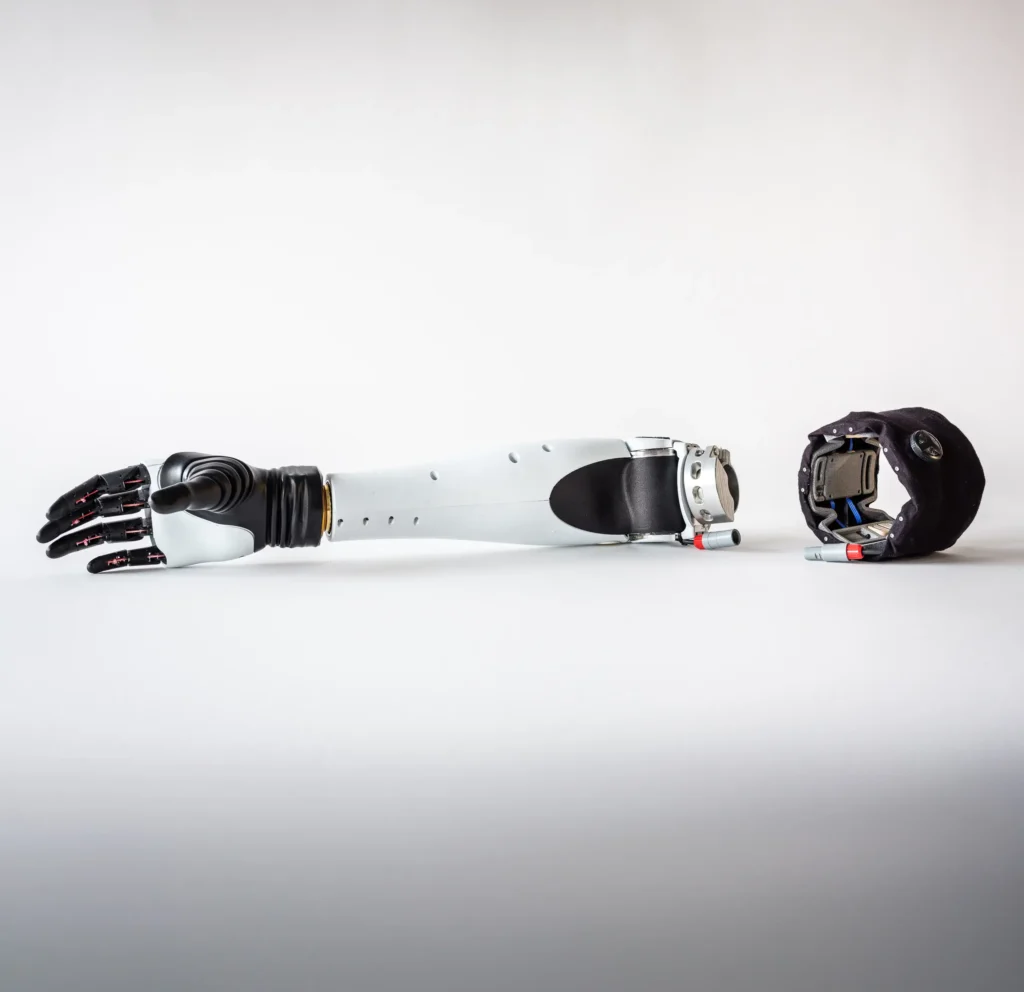
The case of Ars Bionica joining e-Novia Venture Studio shows this path. Ars Bionica was born from more than ten years of work at the Rehab Technologies Lab, a joint laboratory between the Italian Institute of Technology and INAIL, focused on the development of advanced, reliable and accessible prosthetic solutions.
Ars Bionica’s entry into the e-Novia ecosystem connects scientific research, industrial development and company building. In the prosthetics sector, the value of a technology does not depend only on engineering quality. It also depends on the ability to become a product, reach users and fit into a sustainable model.
The e-Novia Venture Studio works precisely on this transition. Its goal is to turn advanced technologies and entrepreneurial ideas into scalable companies, connecting research and industry through a structured development path.
In Medtech, this approach is especially relevant. A solution may have strong scientific foundations, but without execution it may never reach the people who could benefit from it. Venture building helps create a concrete path from technology to market.
Medtech is one of the fields where integrating sensors and artificial intelligence into physical products can create some of the highest added value. The impact is not limited to business competitiveness. It also affects the quality of healthcare services and people’s lives.
Through its innovation consulting, e-Novia supports companies from strategy definition to execution and implementation. This approach is valuable when an organization needs to understand how to integrate AI, sensors, automation or digital platforms into a product or process.
e-Novia’s contribution is focused on turning innovation into a system that can be built. This means working on requirements, product architecture, user interaction, prototyping and the path toward industrialization.
In Medtech, the difference between a good idea and an adoptable solution often lies in the ability to manage this complexity. Technology must be designed to work, but also to be accepted, maintained and integrated. This is where consulting and engineering experience become decisive.
👉 Discover how e-Novia supports companies, researchers and industrial partners in the development of Medtech solutions, from technology validation to venture building.