Building Physical AI ventures at e-Novia Investor Day
How e-Novia’s Physical AI Investor Day connected startups with investors and industry...

Manufacturing does not need more procedures. It needs better ways to govern the knowledge that allows plants to operate reliably every day.
In many industrial companies, SOPs already exist. They have been formalized and made available through corporate systems. In some cases, they are accessible digitally. In others, they remain embedded in technical manuals or quality documentation. Their presence, however, does not necessarily mean that the process is truly under control.
A procedure creates value when it becomes part of daily work. It should help people interpret an activity correctly and reduce ambiguity in critical steps. When it remains disconnected from the production environment, it risks becoming a formal document that supports compliance but has limited impact on performance.
This is where SOPs in manufacturing take on a more strategic role. They are no longer just instructions to follow. They become a way to turn shop-floor experience into an enterprise asset.
Every production environment holds a significant share of its value in people’s expertise. Experienced operators and line managers know details that rarely appear in official documentation. They can recognize unusual machine behavior or anticipate a recurring error before it becomes a quality issue.
This knowledge is essential. It can also become fragile when it remains tied to individual experience. Skills turnover and the onboarding of new people can slow down knowledge transfer and increase process variability.
This is why standard operating procedures matter. The concept of a Standard Operating Procedure refers to step-by-step instructions designed to support the execution of recurring activities. In today’s manufacturing environment, this function remains critical. Yet it needs to evolve.
An effective SOP should not simply describe a process. It should become part of how the organization learns and keeps its operational know-how current.
The most common issue is not the absence of procedures. It is the gap between the written procedure and the actual process.
Production changes at increasing speed. Products change. Working conditions change. Equipment and quality requirements evolve. SOPs often follow these changes with a delay. They can become outdated, or remain formally correct while no longer reflecting the way work is actually performed.
When this happens, the company is exposed to a silent form of inefficiency. Operators interpret instructions differently. New hires learn by imitation. Quality issues are detected downstream. Continuous improvement struggles to rely on robust operational evidence.
In this context, SOPs in manufacturing should not be treated as a documentation topic. They are part of how the enterprise makes its know-how explicit and keeps it aligned with the evolution of production.
Many manufacturers have started to digitize work instructions. This is a necessary step, but not always a transformative one.
Moving a paper-based procedure into a digital format does not automatically change the way work is performed. If the content remains static or disconnected from the workstation, the benefit is limited.
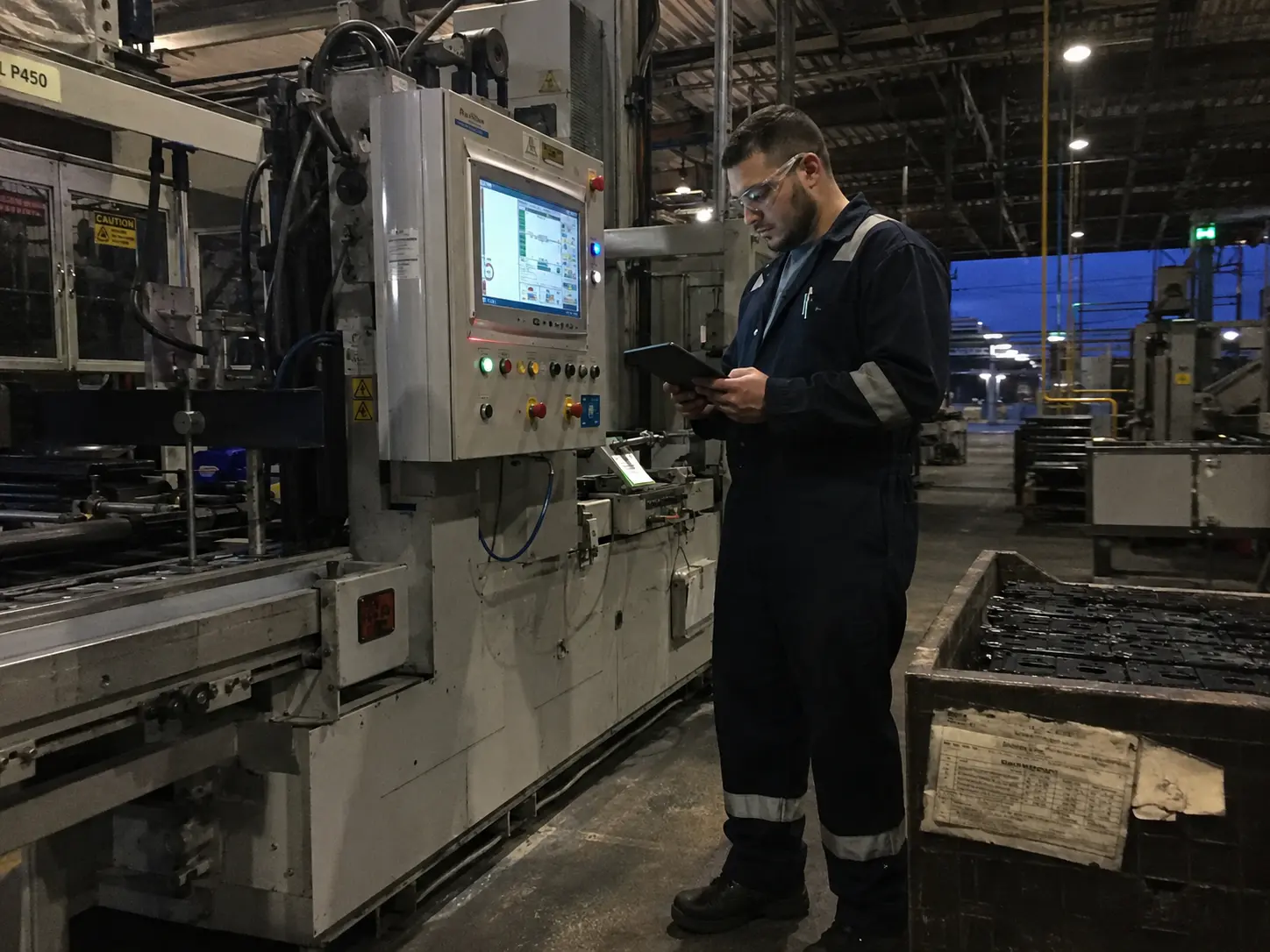
Digital work instructions become relevant when they support the operator at the moment of execution. They can show the correct step, trigger a safety check or record the progress of an operational sequence. The value is not in the digital layer itself. It is in making the right information available where the work takes place.
This changes the role of the SOP. It moves from a reference document to an active component of the process. It does not replace operator experience. It makes that experience more accessible across the organization.
In production, a significant share of errors comes from incomplete information or inconsistent interpretation across shifts and workstations.
Standardization does not remove industrial complexity. It helps govern it. A well-designed SOP creates a common reference for operators and for those responsible for monitoring the process. This is especially relevant in manual and semi-automated activities, where outcomes still depend directly on correct execution.
For an industrial company, this means that SOPs are not merely a way to organize documentation. They are a lever to protect quality and reduce the hidden cost of error. When clear operational references are missing, even an apparently simple process can generate instability. The same principle is reflected in applied production research such as The importance of production standard operating procedure in a family business company, which addresses the relationship between SOPs and consistency in production work.
The difference, therefore, is not the procedure as a document. It is the organization’s ability to turn that procedure into a standard that is actually adopted.
The value of SOPs in manufacturing becomes particularly visible when a new operator enters the shop floor.
In many production environments, learning still happens through shadowing and verbal explanations. This model preserves an important human component, but it can create significant differences in the quality of training received.
When work instructions are clear and embedded in the work context, onboarding becomes more robust. New operators can build autonomy progressively, while the company reduces its dependence on informal knowledge transfer.
The objective is not to replace coaching. It is to avoid restarting from scratch with every new hire. A factory that can transfer knowledge in a structured way is more resilient and better prepared to scale.
The most relevant evolution is the convergence between SOPs and artificial intelligence applied to processes.
AI can support the creation and updating of work instructions, for example by starting from operational videos or technical documentation. It can help identify inconsistencies, simplify complex content and accelerate the translation of procedures across international plants.
The point, however, is not to automate documentation. Value emerges when artificial intelligence helps keep the designed process and the executed process aligned.
In manufacturing, AI becomes transformative when it connects with the physical world. Machines and operators become part of a system in which information is no longer separated from action. This is the domain of Physical AI, where digital intelligence supports concrete activities inside the production process.
One of the most relevant opportunities is the connection between digital SOPs and execution verification systems.
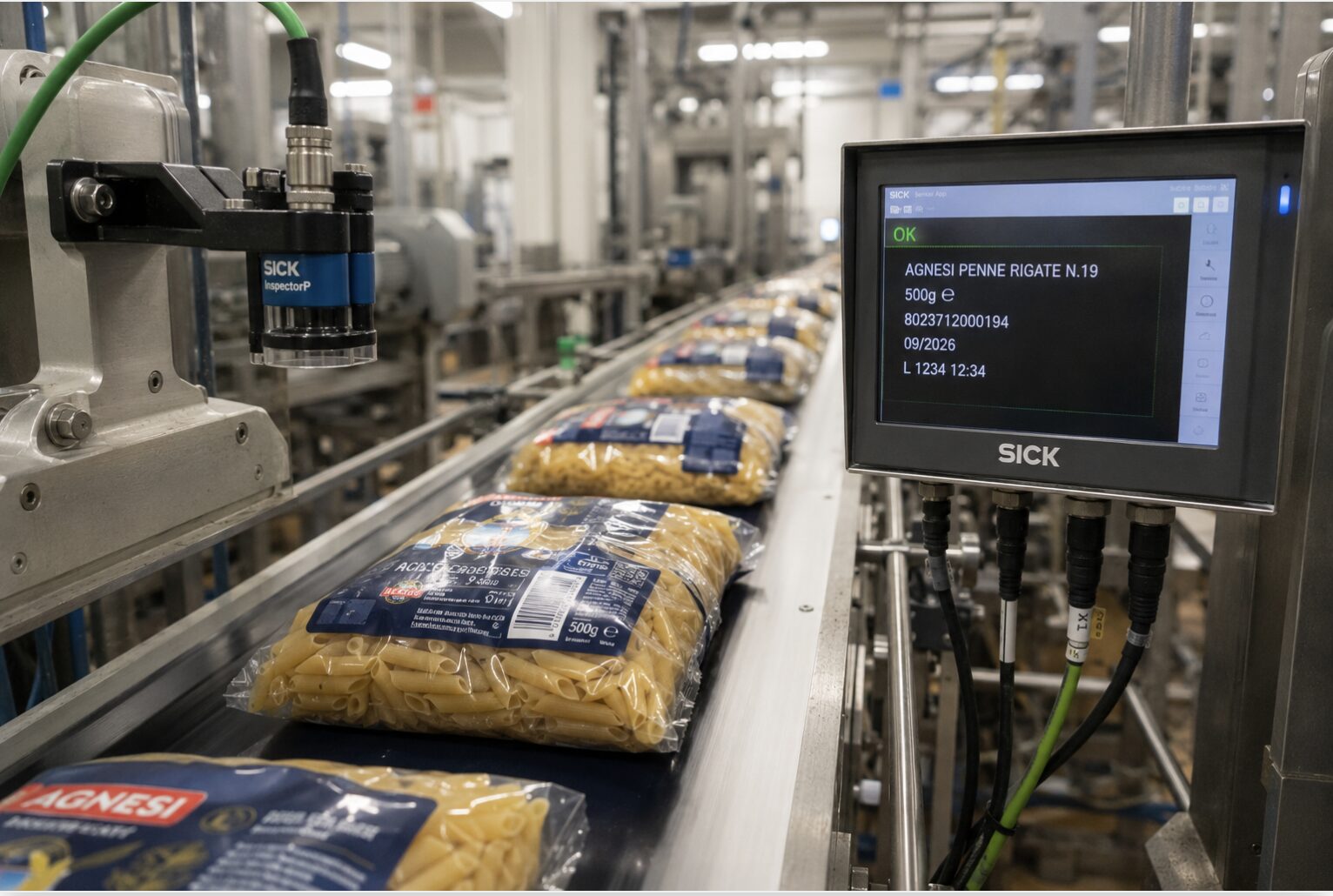
Through computer vision, sensors and smart poka-yoke logic, work instructions can become part of a system capable of recognizing deviations while the process is underway. If a component is positioned incorrectly or a sequence is skipped, the operator can receive immediate feedback.
Smart Robots, a company within the e-Novia Venture Studio, is a concrete example of this evolution. Its solution enables the digitization of manual workstations by integrating work instructions and operational controls directly into the work environment.
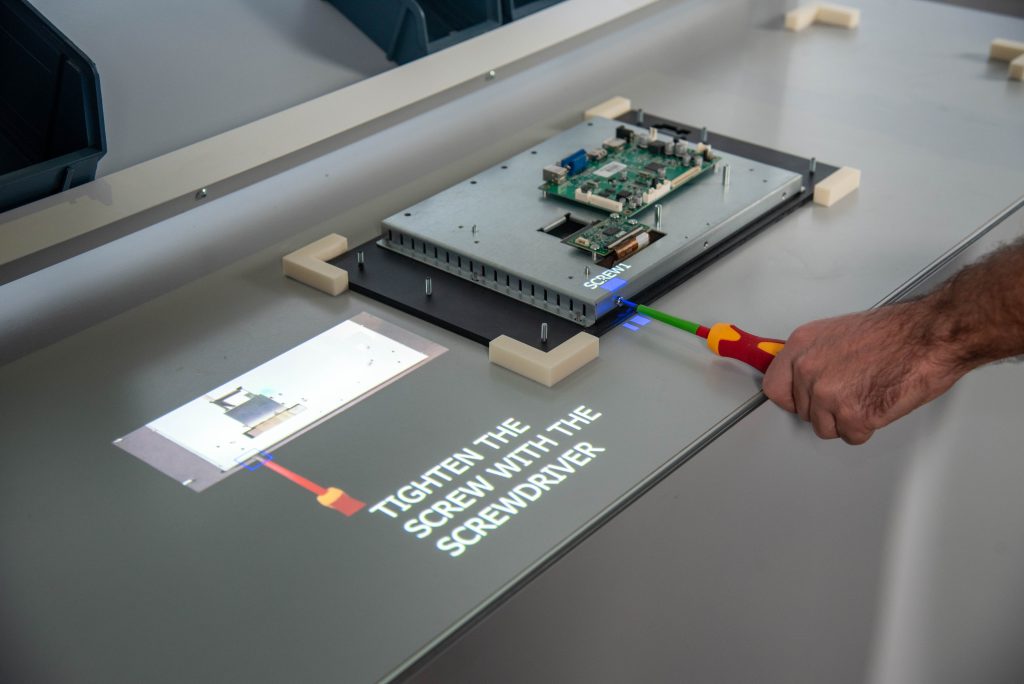
The system supports the induction of new operators and makes staff rotation easier while maintaining quality oversight during execution. This helps reduce training time and costs, particularly in environments where workforce flexibility is critical to operational continuity.
The technology can be applied to different manual operations. In assembly, it supports the correct execution of operational sequences. In packaging and kitting, it helps verify the presence of components. In screwing operations, it guides the operator through the most sensitive process steps.
A relevant aspect is the ability to integrate the solution into existing workstations. This makes adoption less invasive and allows companies to intervene on workbenches or lines in continuous motion without redesigning the production architecture from the ground up.
This approach shows how the SOP can move beyond its role as a document. The instruction becomes guidance at the moment of execution. Quality control does not only act downstream. It supports the process as it happens.
For many manufacturers, this is a decisive shift. It brings quality and production closer within the same operational flow. It also makes manual work more objective, without reducing the central role of the operator.
Revisiting SOPs in manufacturing can become a practical entry point for industrial innovation.
Companies do not always need to start with large-scale transformation programs. A line with high variability or a critical workstation can be an effective place to begin. Working on operating instructions allows the company to observe the process closely, understand where inefficiencies arise and design solutions that are consistent with real work.
From this perspective, the topic is directly connected to process innovation consultancy. Innovating a process does not only mean introducing automation or new digital tools. It means rethinking how people and technologies work together to create value.
This is also the perspective explored in e-Novia’s article on industrial process innovation, where transformation is framed as a concrete evolution of production systems rather than a standalone technology initiative.
SOPs become a tangible point of access to transformation. They are close enough to daily work to reveal where the process is underperforming. They are also structural enough to influence the organization’s ability to improve over time.
The future of SOPs in manufacturing will not be determined by the number of documents available. It will depend on the quality of the knowledge that the company is able to make usable.
The most advanced manufacturers are already moving beyond the idea of the SOP as an attachment to the quality system. They are turning it into a component of the industrial process, connected to real work and to the organization’s ability to learn.
The key question is not whether the company has procedures. The key question is whether those procedures make the process more governable.
When they do, SOPs stop being an obligation. They become a lever of industrial competitiveness.
Discover how e-Novia supports companies in process innovation and in the adoption of Physical AI technologies to make production activities more effective.