Building Physical AI ventures at e-Novia Investor Day
How e-Novia’s Physical AI Investor Day connected startups with investors and industry...

Food recalls aren’t always caused by contamination. In Italy, many begin with something simpler: a label that doesn’t match what’s actually inside the package.
Il Fatto Alimentare, one of the country’s most closely followed food safety outlets, tracks every recall notice published on the Ministero della Salute’s official registry. By its own count, it logged 273 recalls covering 592 products in Italy since the start of 2025. Labeling issues, including missing allergen declarations, incomplete ingredient information, and incorrect labeling, appear repeatedly among these notices, alongside contamination and other causes.
Individual cases make the pattern concrete. Among the recalls Il Fatto Alimentare reported in late 2025, a traditional Varese dessert sold under the InLombardia brand was pulled from Carrefour shelves because the label failed to specify a declared allergen, and Mozart liqueurs were recalled separately for not noting the presence of milk and dairy derivatives, a serious omission for anyone with a dairy allergy. In both cases, what triggered the recall wasn’t the product, it was a mismatch between what the package said and what was actually inside it. At the EU level, Italy is regularly among the countries with the highest number of RASFF notifications, the network authorities use to flag and coordinate on food safety risks across borders.
Deloitte’s food safety practice frames the cost of a recall in two layers: direct costs, meaning notification, inventory write-off, and legal fees, and indirect costs, meaning brand damage and lost goodwill that tends to outlast the recall itself. For an Italian producer, that second layer carries particular weight, since a large share of Italian F&B output is exported, and a labeling problem that surfaces domestically can just as easily resurface as a rejection at a foreign border.
It’s tempting to assume labeling errors come down to carelessness. In practice, they’re almost always a symptom of process, not people.
Recipe changes, supplier substitutions, and packaging redesigns move at different speeds inside a food company. Product development finalizes a formula, regulatory affairs signs off on claims, marketing approves the artwork, often in different systems and on different timelines. When one step lags behind the others, an outdated label slips through, and nobody catches it until a customer, a regulator, or a lawsuit does.
The other half of the problem is physical, not procedural. On a fast-moving packaging line, a human inspector performing manual food label inspection is checking dozens of data points, ingredient list, allergen statement, batch code, expiration date, barcode, against a moving target at production speed. The human eye isn’t built to catch a single wrong word on one package out of ten thousand, consistently, shift after shift. Most manufacturers rely on sampling rather than full coverage, which means most packages leaving the line are never actually checked at all.
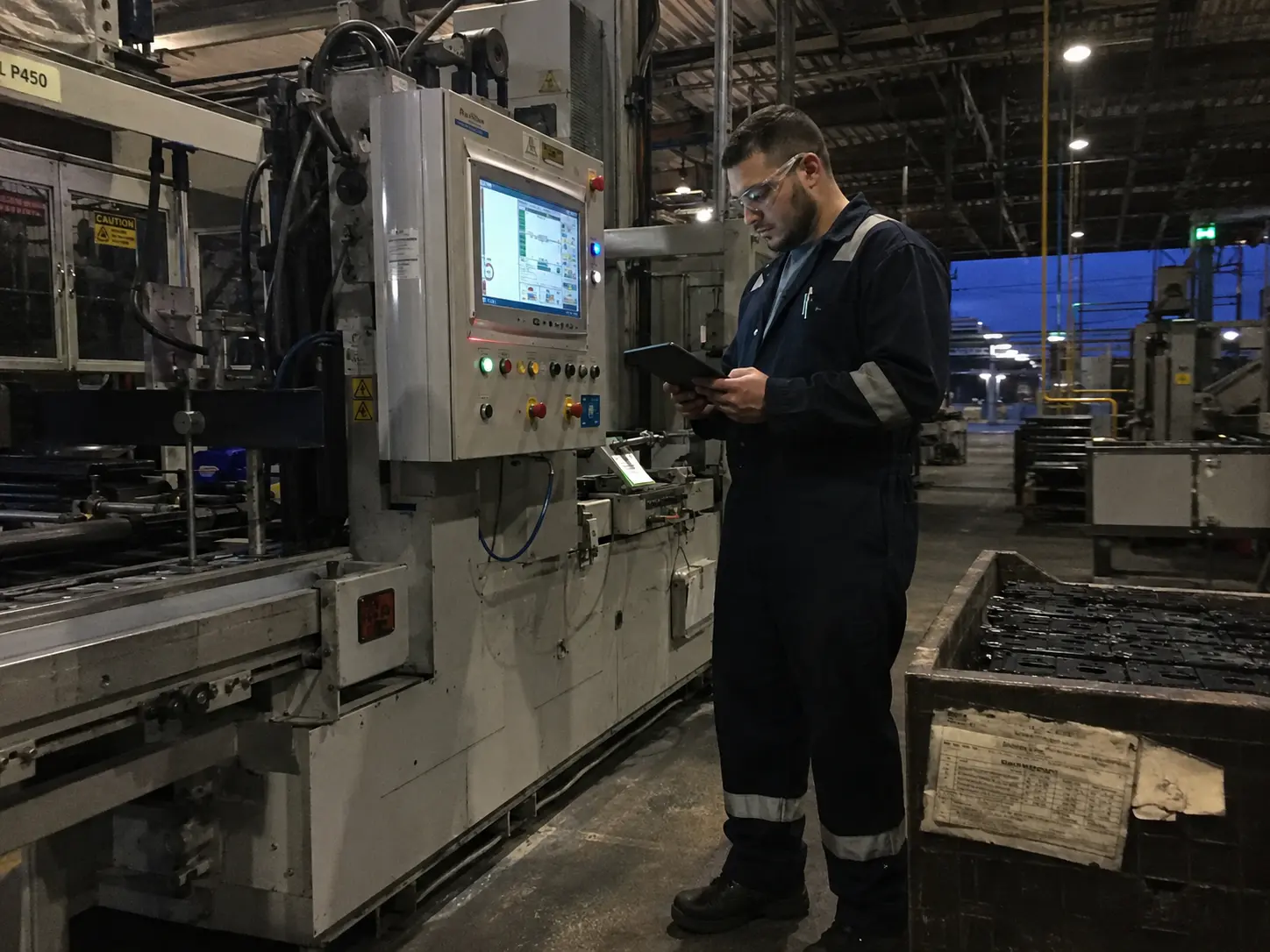
This is exactly the type of industrial challenge where Physical AI creates measurable value, combining computer vision, sensors, and automation tridirectly on the production line rather than relying on a person to catch what a fast-moving process was never designed to let them see.
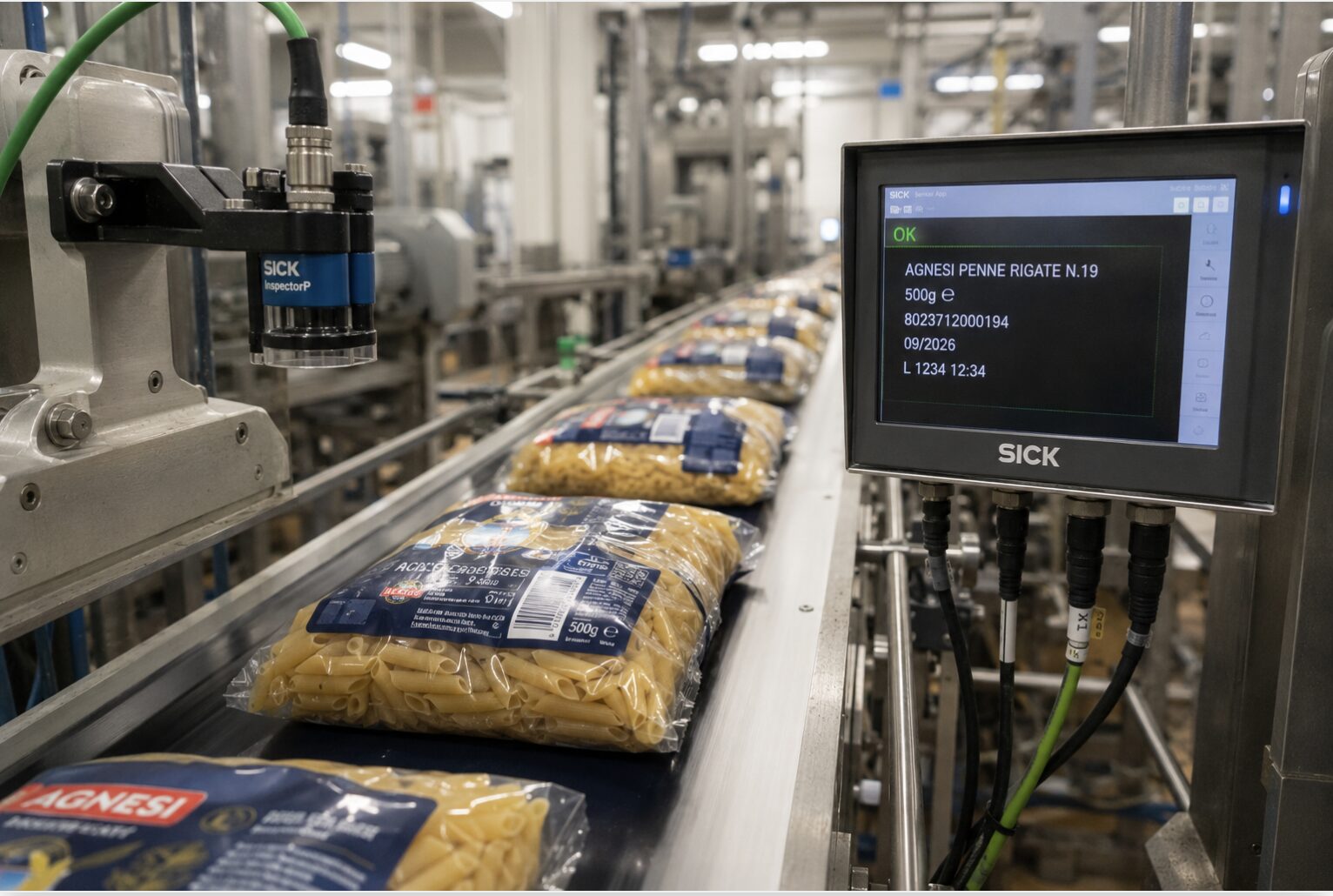
This is a problem with a fairly direct engineering answer: put a camera and a comparison engine at the end of the line, and run food label inspection on every single package instead of a sample.
An inline food label inspection system reads the printed label in real time using optical character recognition, checks it against the approved label specification stored in a database, and confirms barcode, allergen statement, and batch code all match what should be on that specific SKU. When something doesn’t match, the system doesn’t just flag it, it physically removes the package from the line before it reaches a truck, a shelf, or a customer.
The technical challenge isn’t trivial. It requires integrating with existing lines without slowing them down, keeping the specification database current as labels change, and validating accuracy to a level a food safety team can rely on in place of manual checks. That combination, hardware, computer vision, and integration with a company’s production and data systems, sits squarely in what’s known in industrial contexts as Physical AI: intelligence embedded directly into a physical process, not layered on top of it afterward.
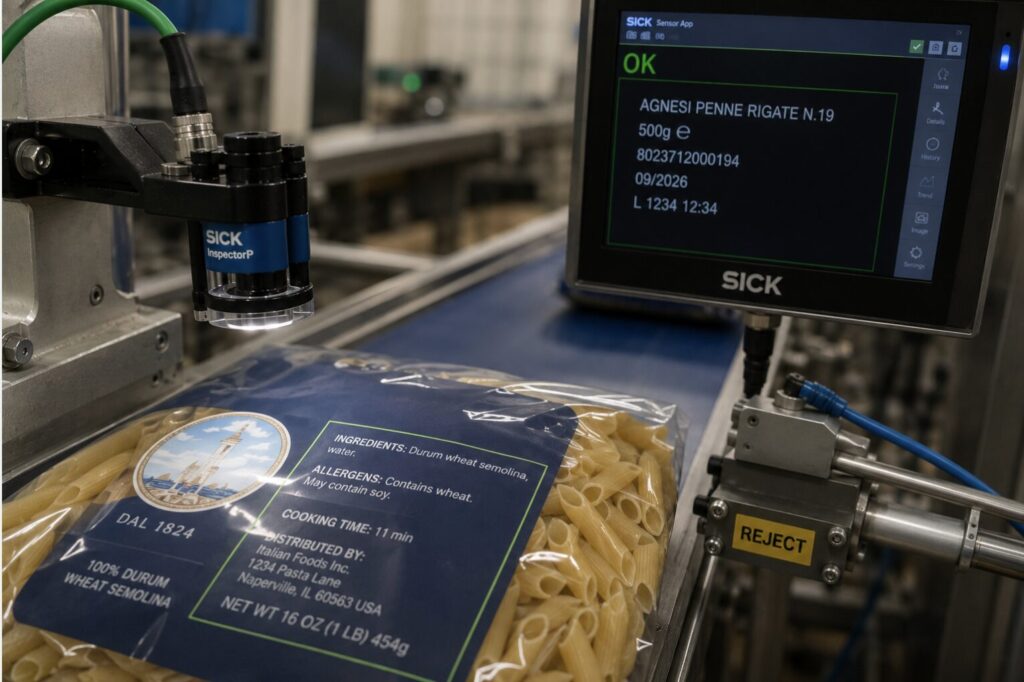
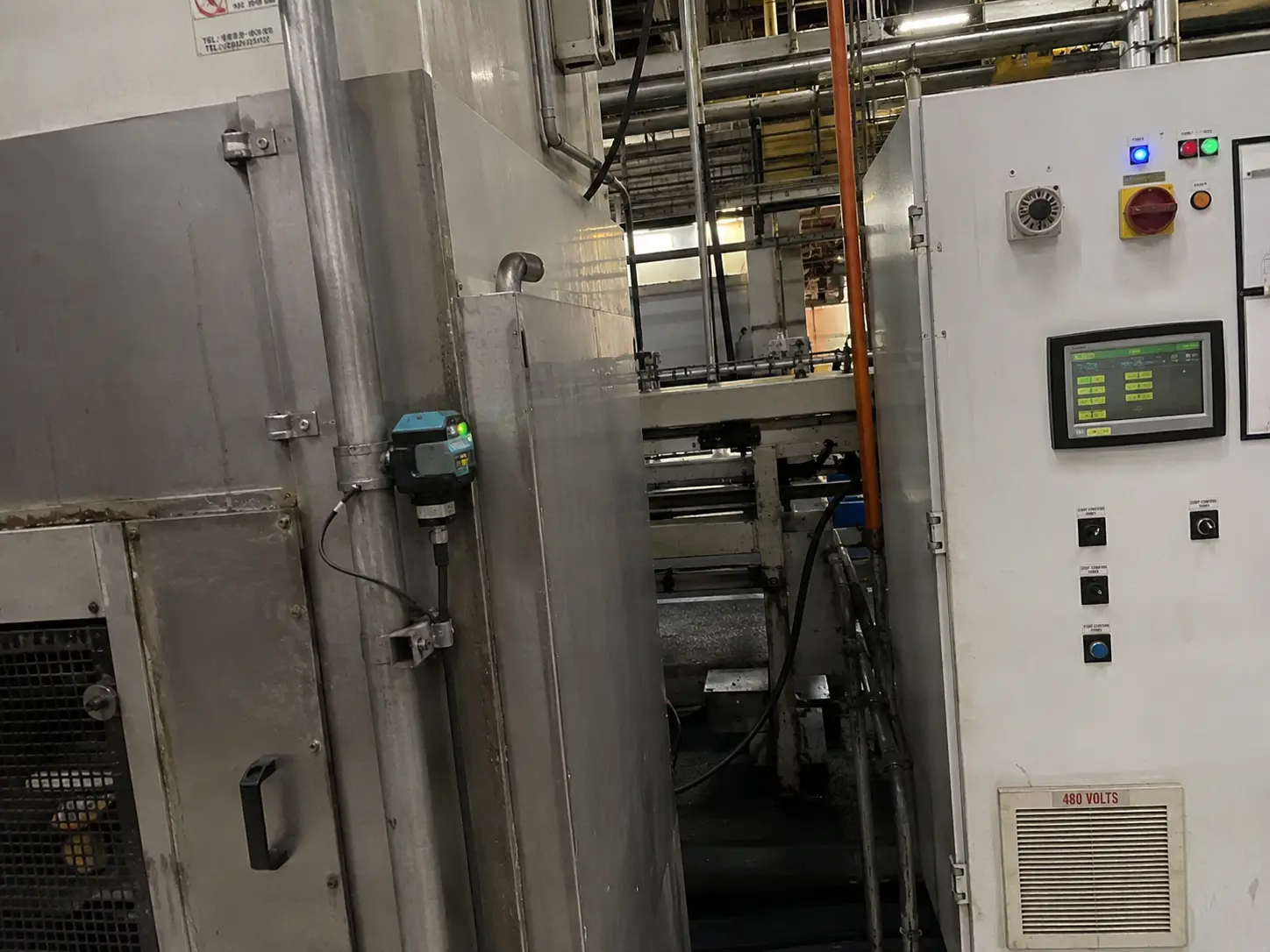
In practice, a retrofit typically means mounting a vision camera and lighting unit at the outfeed of an existing line, connecting it to the line’s PLC (programmable logic controller) so inspection stays synchronized with line speed, and wiring in a reject mechanism, often an air-jet ejector or diverter arm, that triggers the moment the OCR engine flags a mismatch. None of that requires tearing out the packaging machine itself, which is what makes the cost comparison worth making: a retrofit isn’t weighed against a new production line, it’s weighed against the cost of one uncaught error reaching the market, a realistic option even for the small and medium-sized producers that make up most of Italy’s food sector, and a natural fit for the kind of process innovation work that integrates sensing and automation into existing operations rather than replacing them outright.
Italy is one of Europe’s largest food exporters, which means a label that passes review domestically can still trigger a rejection at customs in Germany, or a recall notice in the US, if it doesn’t meet the destination market’s exact requirements. Multiply that across dozens of SKUs and multiple export markets, and manual label review stops being a reasonable control point. One recall can run into the millions once notification, product destruction, and lost shelf space are added up, before any brand impact is even counted. For many manufacturers, a food label inspection system represents a far smaller investment than the financial and reputational cost of a single large-scale recall.
The technology already exists. For many food manufacturers, the next step is recognizing that label accuracy is no longer just a compliance issue, it’s a production-line challenge that can be engineered, monitored, and continuously improved. The return isn’t only fewer recalls, it’s stronger customer trust, less product waste, and more confidence when expanding into new international markets.