Building Physical AI ventures at e-Novia Investor Day
How e-Novia’s Physical AI Investor Day connected startups with investors and industry...

Anyone who works inside a long industrial supply chain, with multiple suppliers and production stages running in sequence, knows a constraint that no strategic plan can wish away, namely that the margin for error is close to zero. A defect that originates upstream propagates all the way down the chain, an unplanned stoppage in one plant creates delays for everyone downstream, and any technology introduced without accounting for that interdependence risks creating more problems than it solves. In this setting, corporate innovation stops being a matter of creativity and becomes a matter of method.
A McKinsey study based on interviews, workshops and surveys of more than 2,500 executives across over 300 companies set out to isolate what separates large companies that innovate consistently from those that simply execute well on the present. It is a question that, in e-Novia’s daily work with industrial companies running long supply chains under tight technical constraints, translates into a reading of its own, built around four recurring principles rather than an exhaustive list of best practices.
In e-Novia’s experience with manufacturing and industrial companies, the most mature innovation projects never start from the technology that happens to be available, but from the process or market constraint that technology is meant to remove. This holds for product innovation as much as for process innovation, and in complex supply chains it is what separates a project that scales from one that stays an isolated experiment.
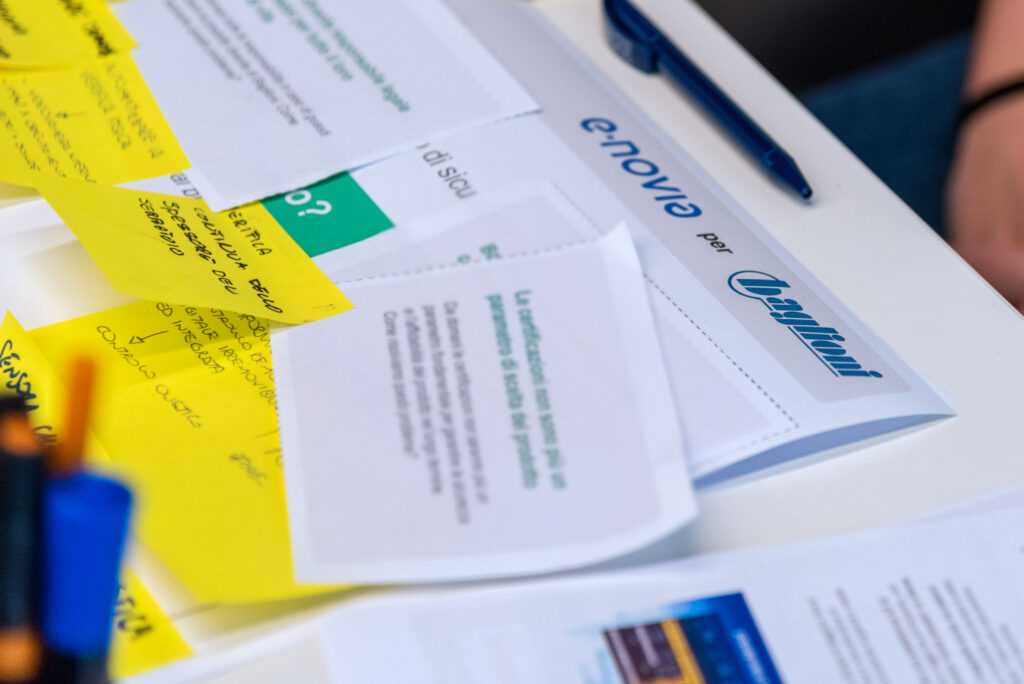
Starting from the constraint rather than the technology means avoiding the most common mistake in industrial innovation projects, which is choosing a tool before really understanding what problem it needs to solve. An algorithm, a new sensor or a digital platform can all look appealing in the abstract, but they only become genuinely useful when they respond to a specific limit of the process or market the company operates in, whether that is a production bottleneck, a safety risk or a shift in what customers are asking for. In the work with Baglioni Group, a manufacturer of compressed air tanks, that is exactly where the project began, with a thorough understanding of the market and the company’s real needs, well before any conversation about which technology to adopt. On paper that reversal can look obvious, but in practice it gets skipped more often than one would think, especially when the pressure to innovate quickly pushes teams to start from whatever technology is getting the most attention rather than from the problem that actually needs solving.
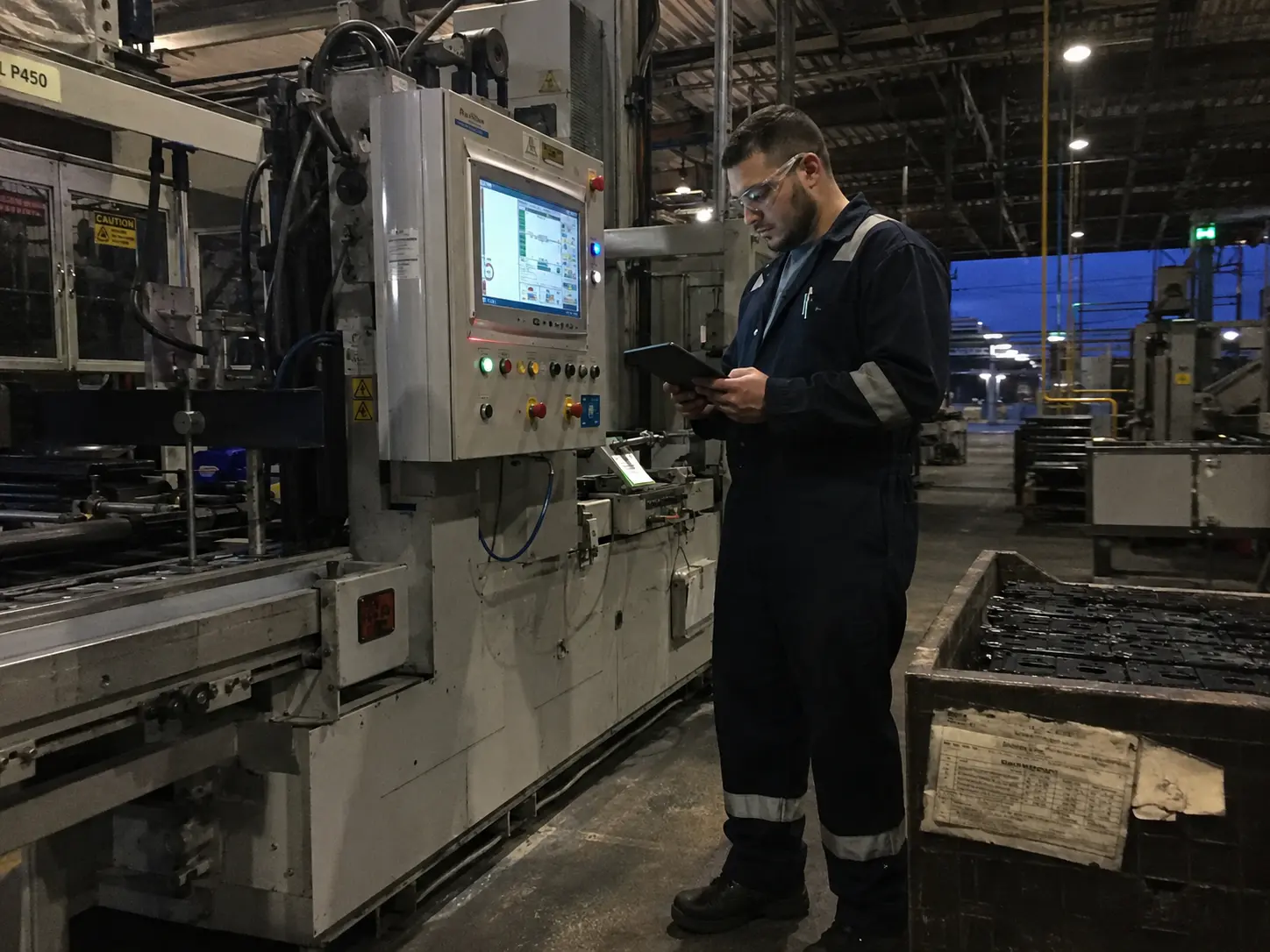
A pilot that works in the lab but cannot be replicated across multiple plants, lines or suppliers is not worth the investment made to build it, because in a supply chain repeatability is not a nice-to-have, it is the condition that makes a project compatible with the logic of the production chain itself. This is why, in process innovation projects, e-Novia’s work always starts from the real operational problem and moves to industrialization only after validating the solution under real production conditions, not in a controlled environment built to make a demo look good.
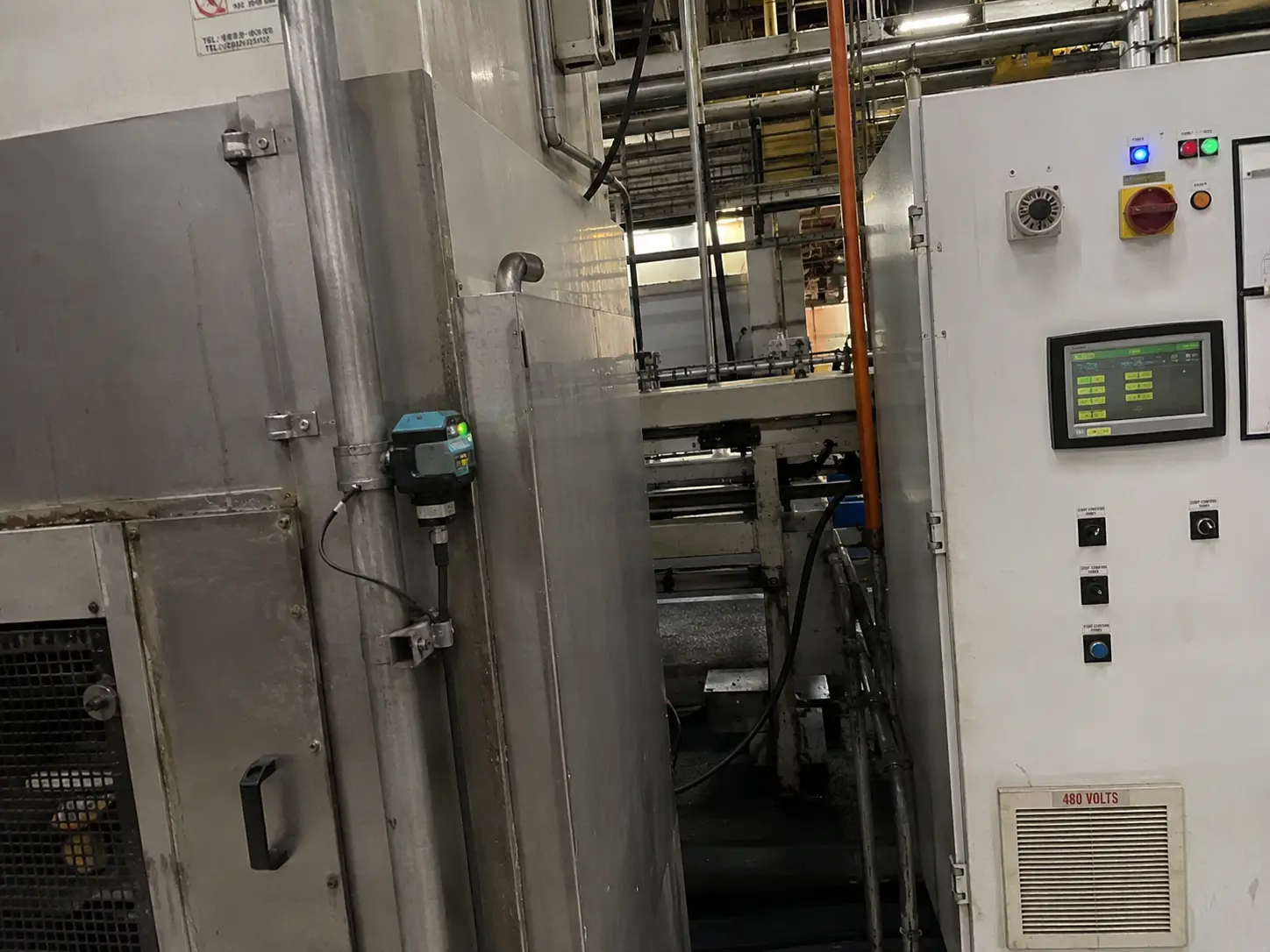
This matters especially when the technology in question is predictive maintenance, one of the most common use cases in supply chains with a high concentration of physical assets. A McKinsey study on the use of analytics in manufacturing estimates that predictive maintenance typically reduces unplanned machine downtime by 30 to 50 percent, while extending equipment life by 20 to 40 percent, a wide range that depends largely on how closely the predictive model is calibrated to the specific constraint of the plant, rather than applied generically from a standard model.
Some of the most solid innovations emerge when a problem identified inside a single company is developed through a structure designed to extend beyond that company’s boundaries. Tokbo is one example of this. It is a spin-off born from the know-how of Agrati, a leading group in fastening systems for the automotive industry, combined with e-Novia’s expertise in sensing and artificial intelligence. The project started from a very specific need around smart bolts, but it evolved into a continuous, predictive monitoring system for the structural health of infrastructure, now installed on more than 70 structures ranging from railways to subways, airports and amusement parks, well beyond the automotive sector it started from.
This kind of trajectory, where an industrial insight grows into a standalone company able to serve other sectors, rarely comes out of an isolated R&D function, but requires a corporate structure and a network of competences designed from the outset to share risk, intellectual property and development capacity.
A final principle concerns how a company judges whether an innovation project is actually working. In complex supply chains, the metrics that matter are very concrete, such as a reduction in scrap, fewer unplanned stoppages or a shorter time for a batch to move through the chain, rather than generic indicators tied to whether a new technology has been adopted. It is the same reason why, as discussed in another piece on industrial process innovation and the limits of AI on its own, an algorithm that stays confined to a test environment without being tied to a real industrial KPI rarely produces a measurable return.
Taken together, these four principles are not a checklist to apply mechanically, but a working order drawn from e-Novia’s direct experience with supply chains where every stage depends on the one before it and the margin for error is kept to a minimum. Starting from the constraint, validating under real production conditions, building an ecosystem wider than the company itself, and measuring impact with concrete industrial indicators is what, in practice, separates an interesting idea from an innovation that genuinely becomes part of how the supply chain works.
If your company operates in a supply chain with demanding technical constraints and you want to know where to start structuring an innovation path, e-Novia’s process innovation consulting page describes in detail how we work, from diagnosing the constraint through to scale-up in production.