Urban Mobility Data: Why the Right Data Matters More Than the Volume
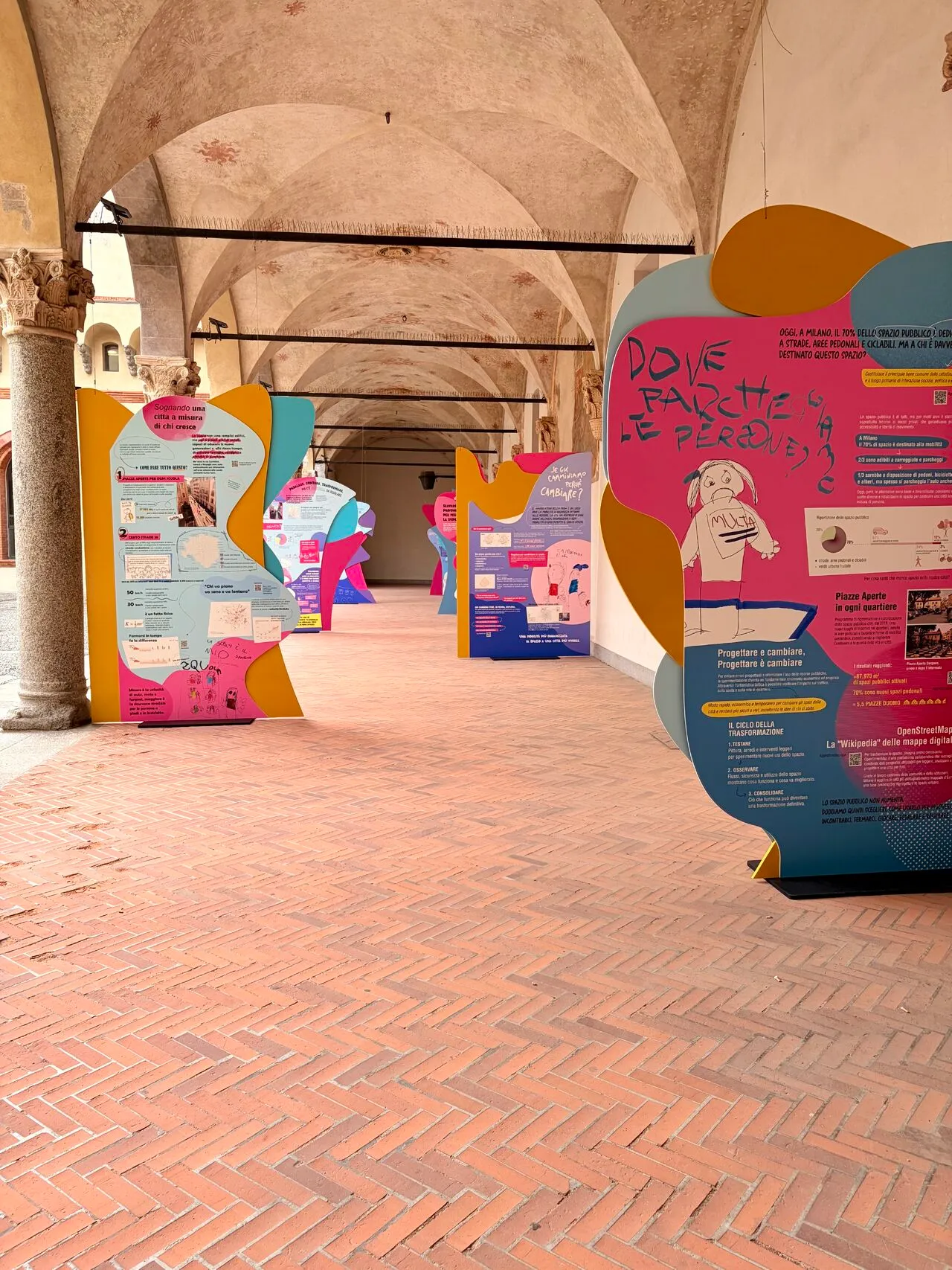
At Milan’s MOBIDAYS, Blimp shares how data helps identify where to act on urban...

A venture studio is a model built for systematic company creation. Rather than waiting for startups to emerge on their own, it identifies high-potential technologies and ideas, validates them, and builds them into real companies, joining as co-founder from the earliest stages. e-Novia’s Venture Studio connects universities, research centers and industry, working closely with technical talent developing advanced Physical AI solutions and turning them into companies built to scale. The starting point is always the same, find genuine potential, then reduce, step by step, the risk that this potential never becomes a sustainable business.
The process starts with structured scouting of deep tech solutions and entrepreneurial ideas coming from universities, research centers, and researchers or innovators who approach e-Novia directly. At this stage, e-Novia’s team evaluates the technology, the strength of the team behind it, and a range of other factors tied to its market and industrial potential. This evaluation is what goes to the Investment Committee, a second and decisive selection gate among the initiatives reviewed.
Only after the Committee selects an initiative, and an agreement brings it into the Venture Studio, does e-Novia start offering concrete support across multiple fronts, from technology development to business model design, and, where the startup does not yet exist as a legal entity, incorporation itself. This is also when industrial partner matchmaking begins, bringing market knowledge, distribution channels and manufacturing capabilities, and when investors are brought in for fundraising. Resources get committed once, to initiatives that have already cleared an independent review.
Deep tech startups carry a double layer of risk, technological and commercial at once. A team has to prove that a solution born in a lab holds up outside controlled conditions, and that a real problem exists to solve, backed by a credible path to industrialization, because solid technology does not automatically produce a solid business. That is why a second, independent layer of review reduces the margin for error, as an MIT Sloan Management Review analysis of venture studio governance models observes, noting that a genuinely independent decision-making system helps promising but still uncertain ventures survive more rigorous initial scrutiny, rather than advance purely on the conviction of the people who proposed them.
e-Novia’s Investment Committee is the independent body that represents this second layer of control. It brings together figures from academia, industry and entrepreneurship with complementary expertise in developing, industrializing and commercializing deep tech, including Vincenzo Ciummo (CEO of VC Growth Partners, Singapore), Angelo Cavallo (Professor of Strategy and Entrepreneurship and Director of the International Master in Innovation and Entrepreneurship at Politecnico di Milano), Domenico Prattichizzo (Rector’s Delegate for Technology Transfer at the University of Siena and Senior Researcher at IIT), and Sergio Buonanno (co-founder of Deal Source Italia and former CEO of Invitalia Ventures SGR), alongside e-Novia leadership including Giuseppe Natale, Massimiliano Benci and Federico L. Moro.
Its role is not to rubber-stamp a decision already made upstream, but to deliver a multidisciplinary, autonomous assessment across four concrete dimensions, namely the technology’s real maturity, its applicative potential in an industrial setting, the scalability of the proposed business model, and the initiative’s ability to answer a verifiable, not merely assumed, market need. This distinction matters, because a committee that simply ratifies the choices of the team that originated the project loses much of its risk-control function. A study published on ScienceDirect on the composition of venture boards finds that the addition of genuinely independent board members often responds precisely to the need to balance decision-making power between founders and investors, bringing in perspectives that are not aligned with the direct interests of whoever is proposing the initiative.
Among the ventures born inside the group, Blimp is a representative case, an AI and computer vision technology that measures and analyzes people and vehicle flows in real time, developed from a specific technical capability and grown into a company with its own board of directors and its own industrial growth path. It is the kind of trajectory that a structured review process, not founder intuition alone, helps make repeatable.

For a financial investor, a path that runs from rigorous scouting to an independent Investment Committee means access to dealflow that has already been filtered against verifiable criteria, instead of having to replicate technical due diligence from scratch, work that requires specialist expertise that is hard to build in-house. For a researcher or startupper, going through this kind of review means getting an honest read on how solid an idea really is, before having to convince the market. In both cases, the value of the process is not that it slows things down with another layer of bureaucracy, but that it lowers, upstream, the odds of committing time and capital to initiatives that would not have survived the market test.