Building Physical AI ventures at e-Novia Investor Day
How e-Novia’s Physical AI Investor Day connected startups with investors and industry...

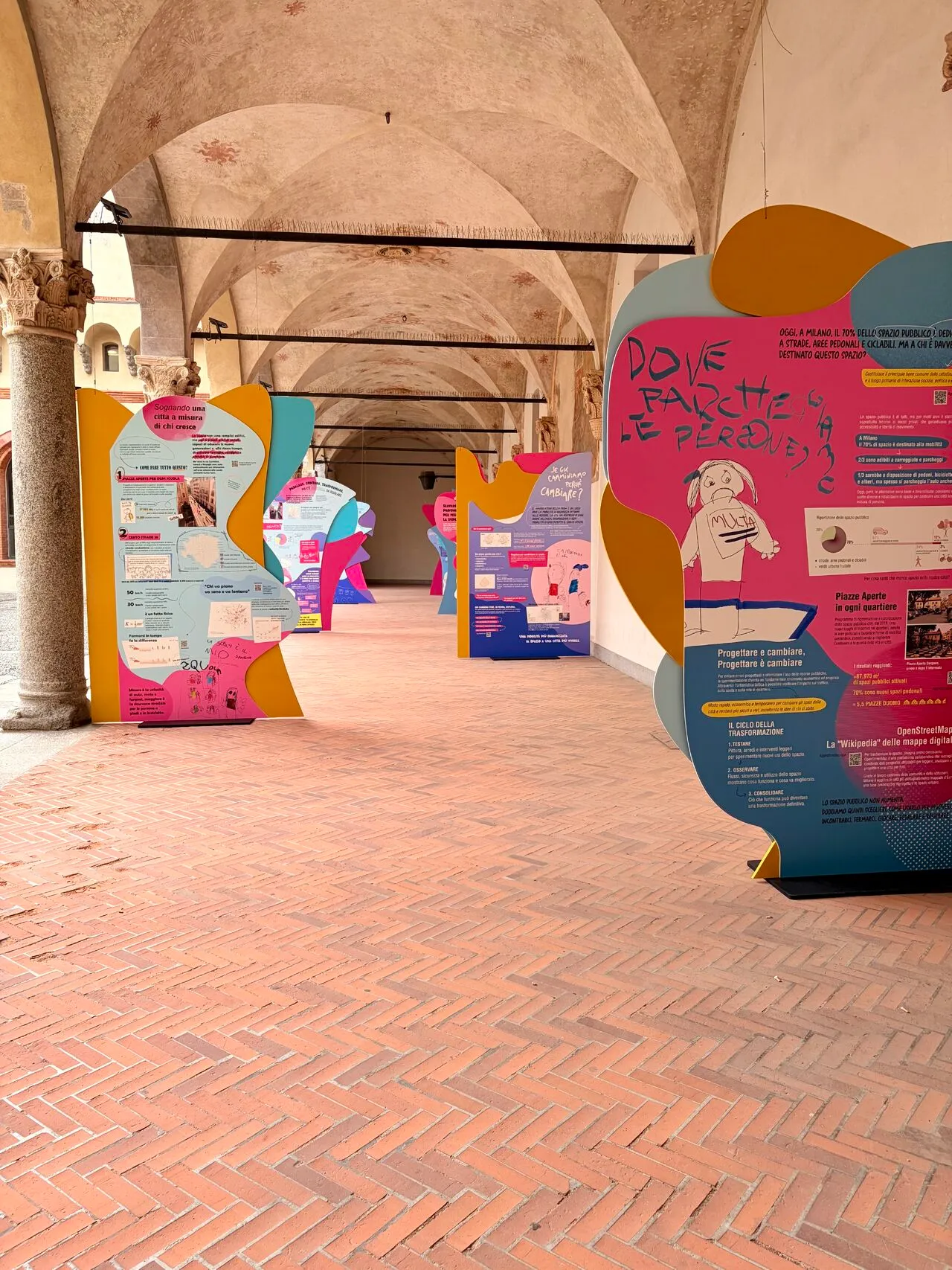
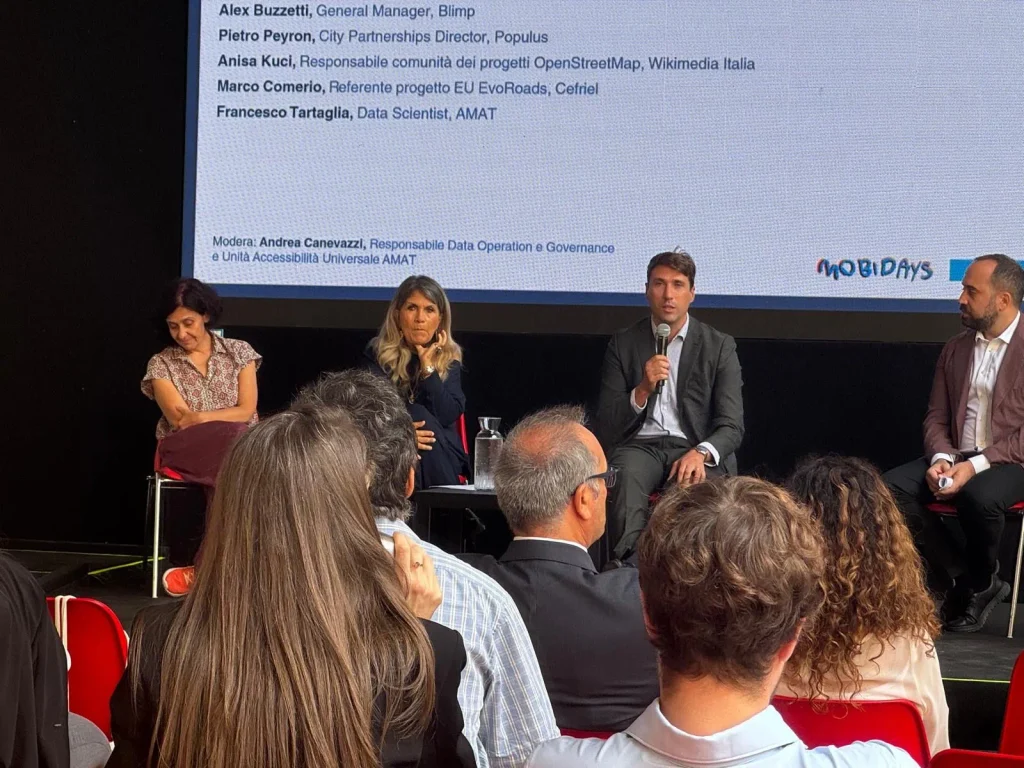
Milan opened the first edition of MOBIDAYS on September 16, the city-wide event promoted by the Municipality of Milan together with AMAT, which through September 22 brought over thirty appointments across the city dedicated to urban mobility. Today, at the Castello Sforzesco, Milan’s historic Sforza Castle, the city hosted the panel “Digitalization for Mobility,” a roundtable on the mobility data ecosystem that opened the third day of the city’s Mobility Forum. Among the speakers was Alex Buzzetti, general manager of Blimp and a board member of e-Novia, the group venture that applies artificial intelligence and computer vision to measuring urban flows.
MOBIDAYS exists to tell the story of the changes underway in Milan’s mobility, with a program built by the city together with AMAT, the agency for mobility, the environment and the territory of the Lombardy capital. The September 18 discussion, moderated by Andrea Canevazzi, brought together different voices around the topic of mobility data, including that of Layla Pavone, alongside other representatives from institutions and companies working on the subject.
It is the kind of occasion where e-Novia, through Blimp, brings its own point of view to a topic that sits at the intersection of technology and public decisions.
Blimp is the e-Novia group company that measures the flow of people and vehicles across urban spaces, through HeadCounter, its proprietary technology that combines computer vision and artificial intelligence to detect passages in real time. The system processes images in volatile memory and deletes them immediately afterward, keeping only aggregated and anonymous data, namely the count of passages and the category of vehicle or pedestrian, without retaining identifiable images. It is an approach consistent with the claim the company uses to present itself on the market, “Good data, better decision,” built to turn movement into information that is useful to decision makers. The same technology is already applied to transport hubs and airports, as well as to shopping centers and urban districts.
Within the group, Blimp is one of the clearest examples of how Physical AI moves beyond screens to measure what actually happens on streets and squares, a subject we have also covered when writing about Europe’s smart cities and the growing weight of data in their transformation.
In its remarks, Blimp put forward a useful distinction for decision makers, the difference between the role of data before a mobility intervention and its role after. Before carrying out an intervention, such as pedestrianizing a street or changing traffic flow, data helps identify where and when a mobility phenomenon concentrates, as well as suggesting some of the causes behind it. It is not just a matter of counting how many people or vehicles cross a given point, but of reconstructing how flows are distributed over time and across the area, including their origins and destinations.
After the intervention, the same data reading answers an equally relevant question, namely whether the choice actually worked. Comparing the situation before and after makes it possible to measure the real effect of a decision and, when needed, to correct it rather than treating it as settled once and for all.
The methodological point that came through most strongly concerned the selection of sources. What matters is not collecting as much data as possible, but choosing the data that is useful for the decision at hand. Field sensors, which in HeadCounter’s case cover a radius of over 200 meters each, provide a precise reading of real flows at a specific point in the city. Telco data, on the other hand, describes movement on a wider scale, while traces generated by mobile devices add a further layer of detail on individual routes. Each source on its own tells only part of the picture, and the right choice depends on the question one is trying to answer.
The value of these discussions lies in bringing different perspectives to the same table. Institutions bring knowledge of the territory and responsibility for public choices, while companies bring tools and measurement capabilities that public administration would rarely develop on its own. Citizens are unlikely to ever see a flow-analysis platform or a computer vision algorithm at work, but they feel its effects when an intervention is placed in the right spot, or when public resources are directed where they are genuinely needed.

For e-Novia, Blimp’s participation in MOBIDAYS is also an occasion to bring the group’s perspective on how artificial intelligence can act on the physical processes of cities, the field we call Physical AI and that we develop through our Venture Studio, from scouting the most promising technologies to building companies capable of bringing them to market. This is where digitalization becomes concrete, when data turns into decisions and decisions turn into a real impact on the city.