Building Physical AI ventures at e-Novia Investor Day
How e-Novia’s Physical AI Investor Day connected startups with investors and industry...

The widespread adoption of connected technologies on the factory floor has generated an unprecedented amount of data. Today, industrial leaders know that the real competitive challenge is no longer just connecting machines, but strategically decoding the information they produce. If treated merely as a historical archive, data is just a storage cost. However, when transformed into actionable insights in real time, it becomes the main driver of Operational Excellence.
In this scenario, the transition from basic Internet of Things (IoT) to the application of Physical AI draws the line between companies that struggle with technological complexity and those that master it to generate measurable value.
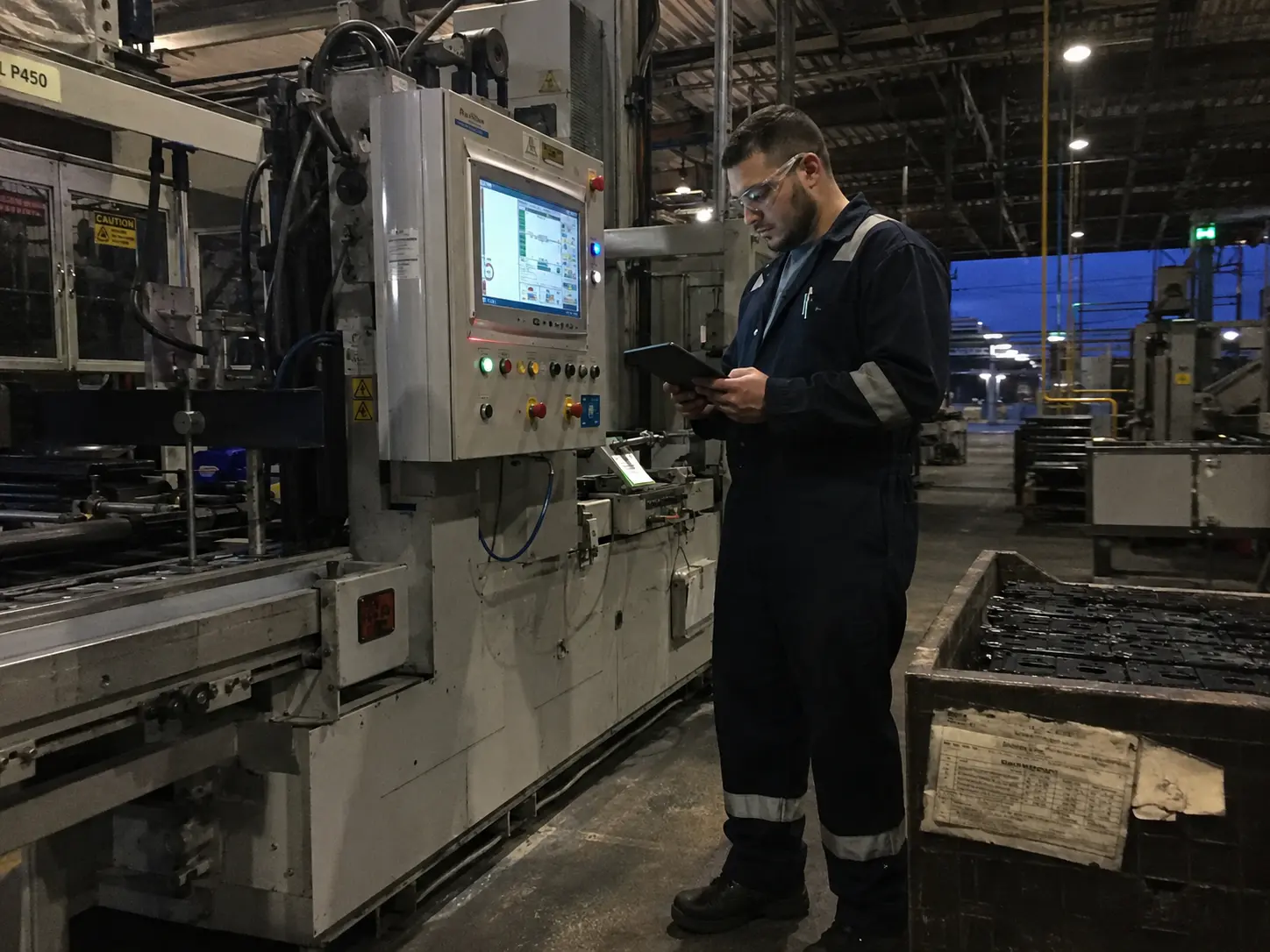
The starting point of any digital transformation is capturing data directly from the shop floor. Historically, manufacturing processes relied on manual tracking, which today has naturally evolved into digital data entry via mobile devices. While using tablets reduces delays compared to paper, it still has a major structural limit: it relies on human action. This exposes the process to delays, missing information, and micro-inefficiencies.
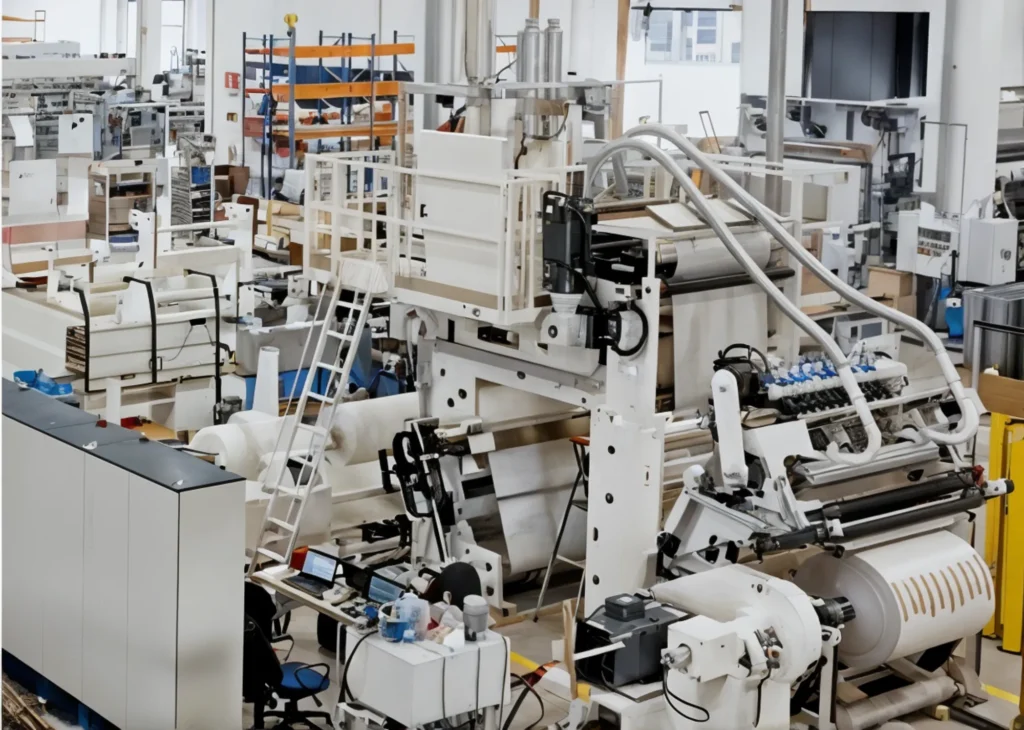
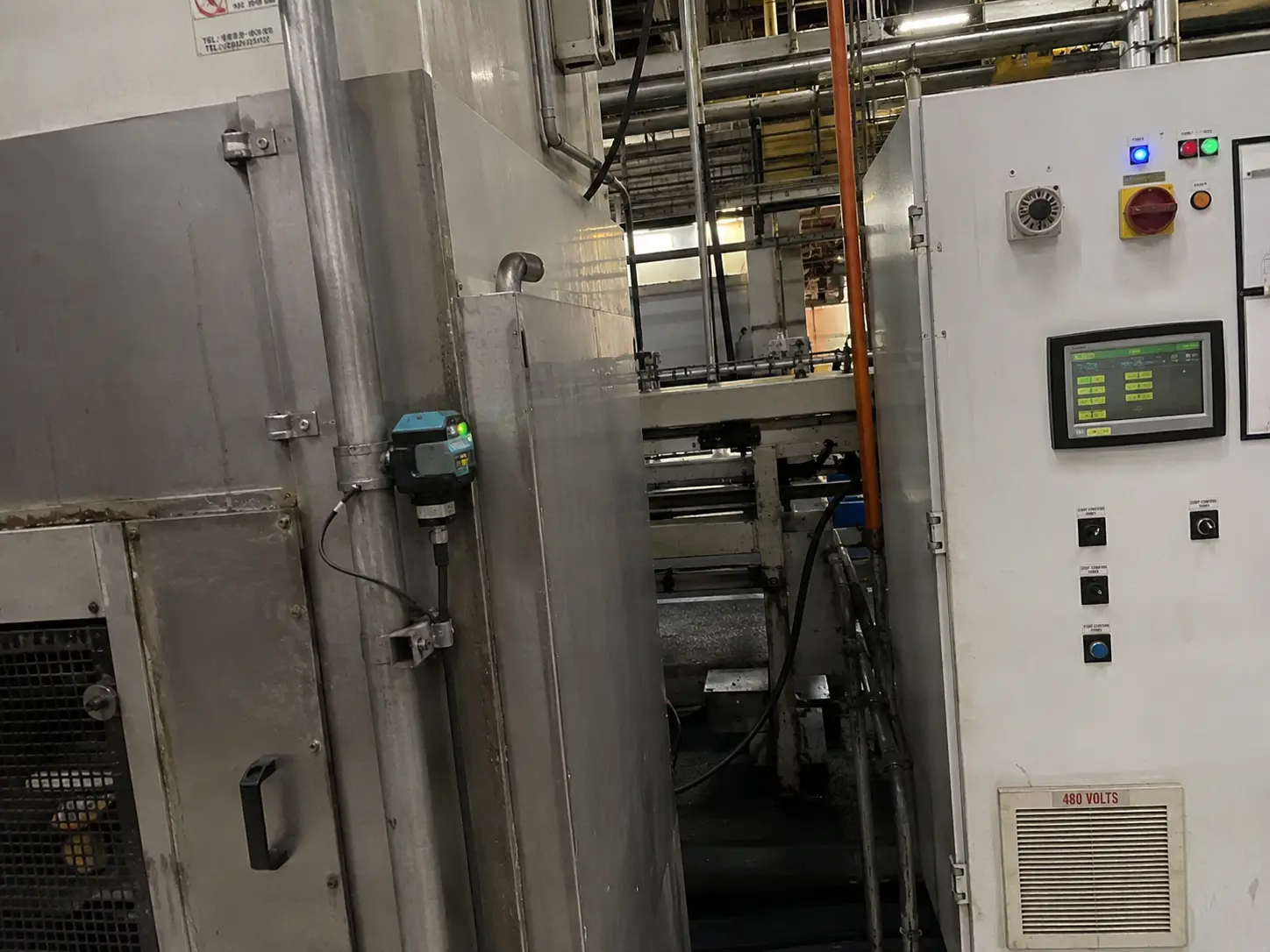
Achieving true technological maturity requires an automated architecture. Deploying an industrial IoT network is not just a hardware installation; it is a complete redesign of the information flow. It involves key strategic steps:
This level of automation eliminates human error and provides an exact map of the factory’s reality. Yet, simple telemetry is not enough to make complex decisions.
Where basic connectivity stops, intelligent orchestration begins. Physical AI steps in to analyze terabytes of raw data and identify patterns that are invisible to human observation or traditional control systems.
Applying Machine Learning (ML) and Deep Learning (DL) models to IoT data means shifting from a reactive approach to a proactive strategy. This directly impacts three core areas of Operations:
Integrating advanced algorithms into decision-making raises a critical issue for plant managers: the problem of transparency, often called the “Black Box” dilemma.
Highly complex predictive models can provide accurate warnings (e.g., “The machine will fail in four hours”), but they often cannot explain the logical reasons behind the prediction. In an industrial setting, this is unacceptable. Organizations driven by Continuous Improvement principles need not only to anticipate a problem but to understand its root cause (Root Cause Analysis).
To mitigate this risk and encourage real technological adoption, innovation consulting is shifting toward Explainable AI. This approach works in two ways:
Only interpretable AI allows operators to trust machines and empowers decision-makers to turn a technical anomaly into a strategic process review, closing the loop of value creation.
Digital transformation cannot be bought off the shelf; it must be designed. For the integration of IoT hardware and Artificial Intelligence to generate a real, measurable financial return, an open, modular, and action-oriented architecture is required.
This is exactly why we developed Think.Link at e-Novia: an AI-ready IoT architecture designed to break down information silos, connect diverse data sources, and make data immediately usable as practical suggestions for operational teams.
The success of an Industry 5.0 initiative lies in the ability to combine the strategic analysis of business processes with end-to-end technological execution. At e-Novia, we shape the innovation born from research, working alongside companies to ensure that every newly installed sensor and every trained algorithm translates into a solid competitive advantage on the market.
👉 Discover how e-Novia supports companies in the strategic adoption of Physical AI technologies to build new competitive advantages.