Urban Mobility Data: Why the Right Data Matters More Than the Volume
At Milan’s MOBIDAYS, Blimp shares how data helps identify where to act on urban...

In the industrial landscape of 2026, innovation is measured by execution. While generating academic research remains vital, the true challenge lies in transforming scientific breakthroughs into market-ready products. This “lab-to-market” gap is where traditional technology transfer models, often limited to IP licensing, frequently fall short.
At e-Novia, we bridge this gap by combining the strategic depth of a Venture Studio with the operational excellence of New Product Development. Our focus is on Physical AI: intelligence embedded into physical systems that delivers tangible value to industrial partners.
Deep Tech ventures, spanning robotics, advanced sensing, and embedded AI, require more than just software validation. They must navigate the complexities of hardware engineering, supply chain logistics, and industrial reliability standards.
The e-Novia Venture Building model acts as an industrial partner for Universities, transforming frontier research into structured, scalable enterprises. We don’t just transfer technical documentation; we build the business architecture, providing the market vision and operational capacity needed to thrive. This model de-risks innovation and accelerates the industrialization of technologies that might otherwise remain confined to the lab.
For established industrial leaders, technology transfer often takes the form of Intelligence Infusion. This isn’t about adding digital features as an afterthought; it’s about evolving the core product to be “natively intelligent” through Physical AI. By embedding perception and autonomous reasoning into physical assets, companies can unlock new service-based business models and optimize operational efficiency across their entire value chain.
The success of e-Novia’s models is evidenced by the growth of companies born from our collaboration with world-class research centers.
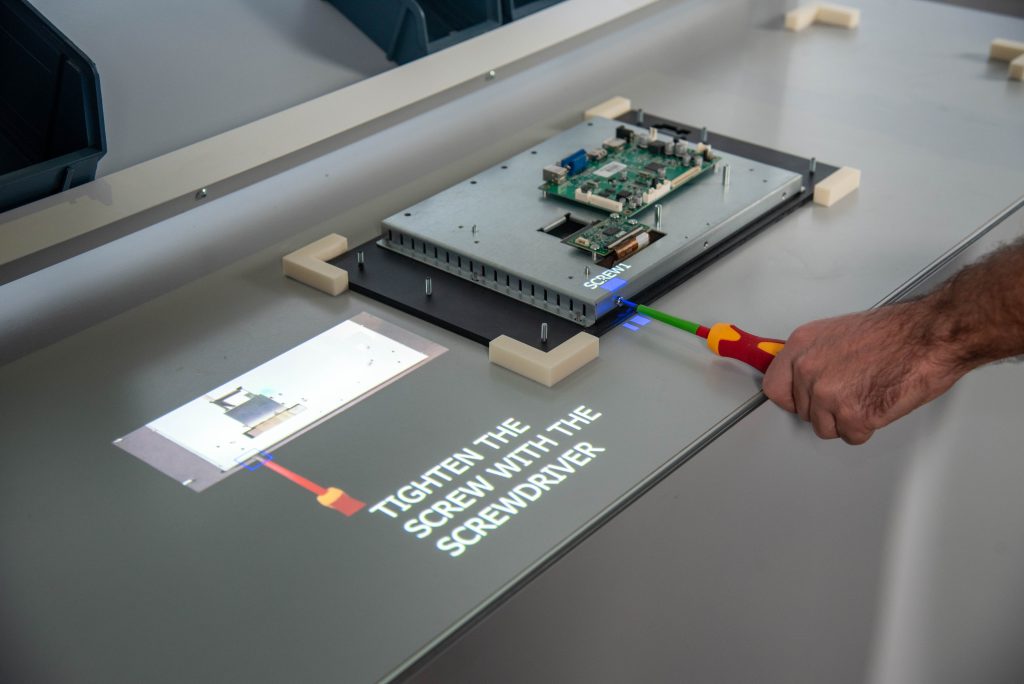
A spin-off from the Politecnico di Milano, Smart Robots has become a key industrial partner for companies implementing collaborative robotics. Their Physical AI-driven system manages real-time interaction between humans and machines:
The evolution of YAPE, developed with the mOve Lab at the Politecnico di Milano, demonstrates the scalability of Deep Tech innovation. Originally known for last-mile delivery, YAPE has successfully pivoted to become a premier provider of autonomous driving software for off-highway vehicles.
Today, YAPE’s 3D perception and navigation stacks are integrated by global OEMs in agriculture, heavy industry, and airport logistics. This transition highlights how technology transfer can transform a research project into a global software standard for professional autonomous mobility.
Technology transfer is the systematic process that connects scientific discovery to industrial capacity. In 2026, e-Novia serves as the architect of this ecosystem, working alongside Universities and industry leaders to build products and companies that redefine markets through advanced technology.
👉 Learn how e-Novia supports businesses and researchers in adopting Physical AI and Venture Building models.