Building Physical AI ventures at e-Novia Investor Day
How e-Novia’s Physical AI Investor Day connected startups with investors and industry...

In today’s innovation landscape, a common misconception prevails: technological advancement is frequently equated with the visual complexity of a machine. However, field experience in the manufacturing sector demonstrates a fundamental principle: the bulkier a technology is and the more it forces operators to alter their established workflows, the higher the likelihood of adoption failure.
True progress in Industry 5.0 does not lie in building more complex and visible machines, but in rendering them silent, natural components of the production process. In this transition, collaborative robotics serves as the keystone to redefine the human-machine relationship, transforming automation from an isolated entity into a synergistic partner capable of maximizing industrial value.
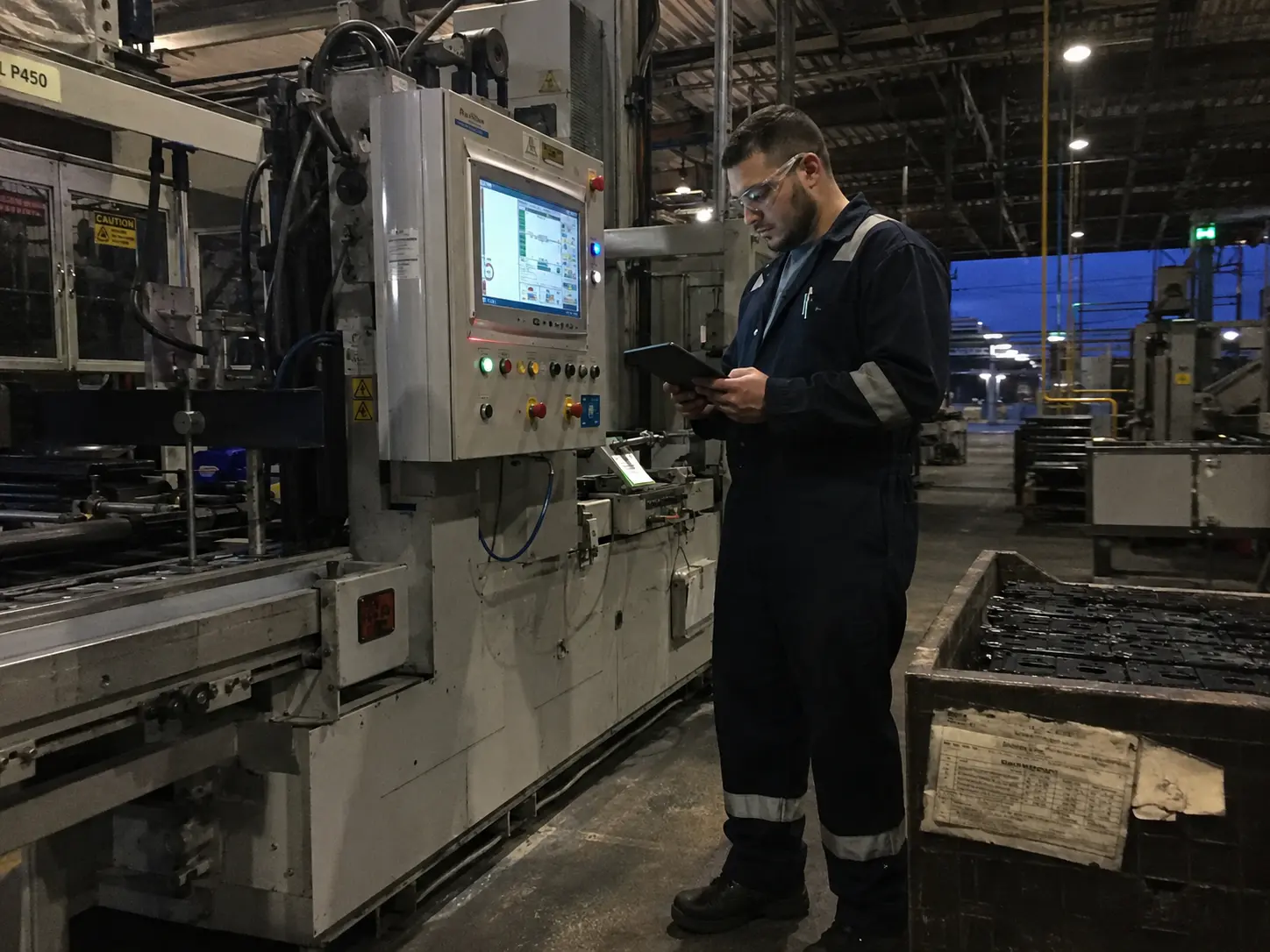
For decades, the industrial robot was considered a machine with defined physical boundaries, isolated behind safety barriers and introduced into the work environment only as an afterthought. This traditional model presents significant structural limitations.
When an operator must interact with a system that imposes rigid perimeters, complex interfaces, or substantial modifications to the workstation, the technology paradoxically becomes an obstacle. This “cognitive friction” is not merely a usability issue; it is a tangible operational cost that slows down production, complicates daily management, and delays the return on investment.
While the first generation of collaborative robotics (the so-called cobots) eliminated physical cages, allowing humans and machines to share the same space safely, the next step is the deep integration of intelligence into everyday work tools. This is the vision of invisible robotics that guides e-Novia’s approach to innovation.
Through Physical AI, the capabilities for perception, analysis, and autonomous action are embedded directly into the hardware of the objects that people already use. Making technology “natural” means definitively breaking down the barriers between the tool and its user.
A prime example of this evolution is represented by the solutions from Smart Robots, a company within the e-Novia ecosystem that minimizes errors in manual workstations. Through an AI-powered 3D vision device capable of recognizing and interpreting the operator’s movements, Smart Robots adapts to and supports manual assembly stations. Instead of interrupting human activity, the system facilitates it in real-time.
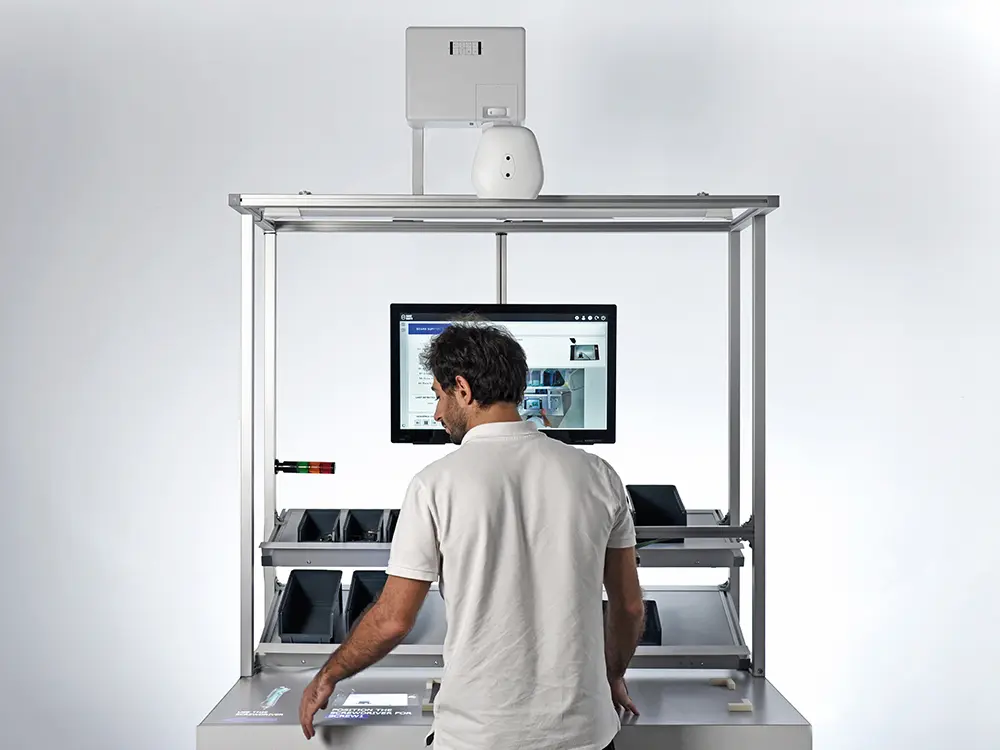
This fluidity of use is essential: if collaborative robotics requires no adaptation effort, the user can focus entirely on high-value-added activities.
The collaborative robotics market is experiencing unprecedented expansion, driven by the need to optimize logistics, implement predictive maintenance, and address labor shortages in physically demanding or hazardous tasks. Whether in manufacturing, precision assembly, or warehouse management, the competitive advantages are evident:
In this scenario of technological convergence, Product Design ceases to be a mere aesthetic exercise and establishes itself as a fundamental lever in any new product development strategy. It becomes the indispensable technical tool for managing complexity. Designing a smart collaborative robotics system means executing a rigorous operation of synthesis: the denser the algorithmic engineering within the hardware, the more immediate the interaction must be.
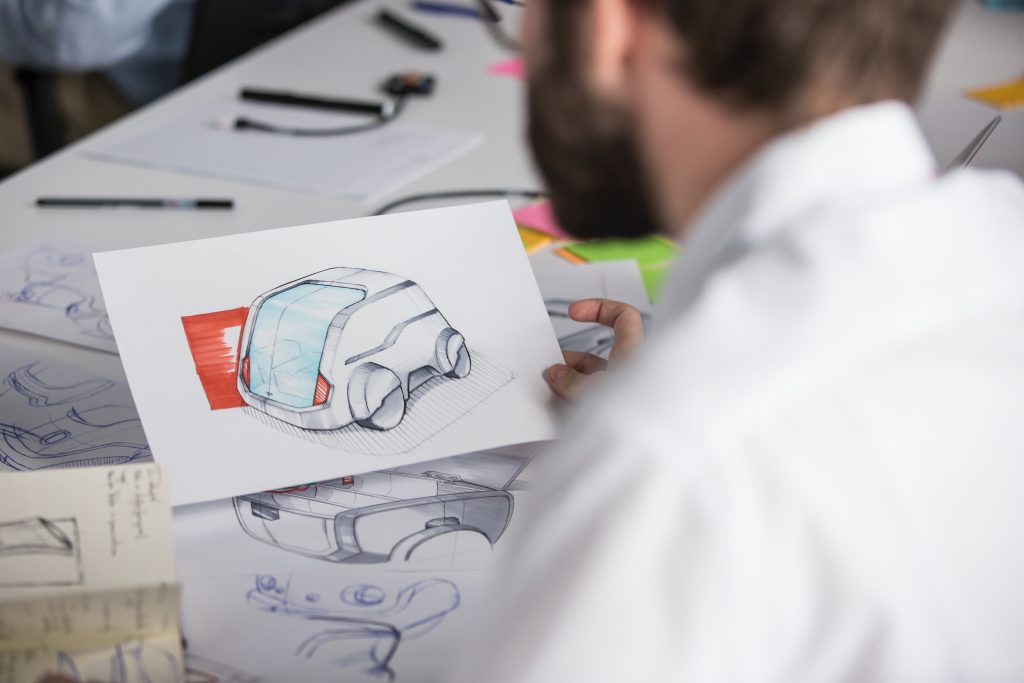
The primary objective is to generate maximum value and the best possible experience for end-users, flattening the learning curve and rendering complex instruction manuals obsolete.
For a manufacturing company, true value does not lie in possessing the most visually advanced machinery on the market, but in validating solutions capable of integrating into processes so fluidly that they are immediately adopted. Relying on targeted innovation consulting for product and technology to focus on collaborative and “invisible” technology allows for a drastic reduction in the hidden costs of integration and the downtime required for staff training, ensuring positive economic impacts and an optimal ROI.
The future of Industry 5.0 belongs to a technology that knows how to step aside, disappearing into the workflow and allowing people to produce better, in total safety, and with significantly less effort.
👉 Discover how e-Novia supports enterprises, industrial partners, and researchers in adopting Physical AI and collaborative robotics technologies to transform production processes.