Urban Mobility Data: Why the Right Data Matters More Than the Volume
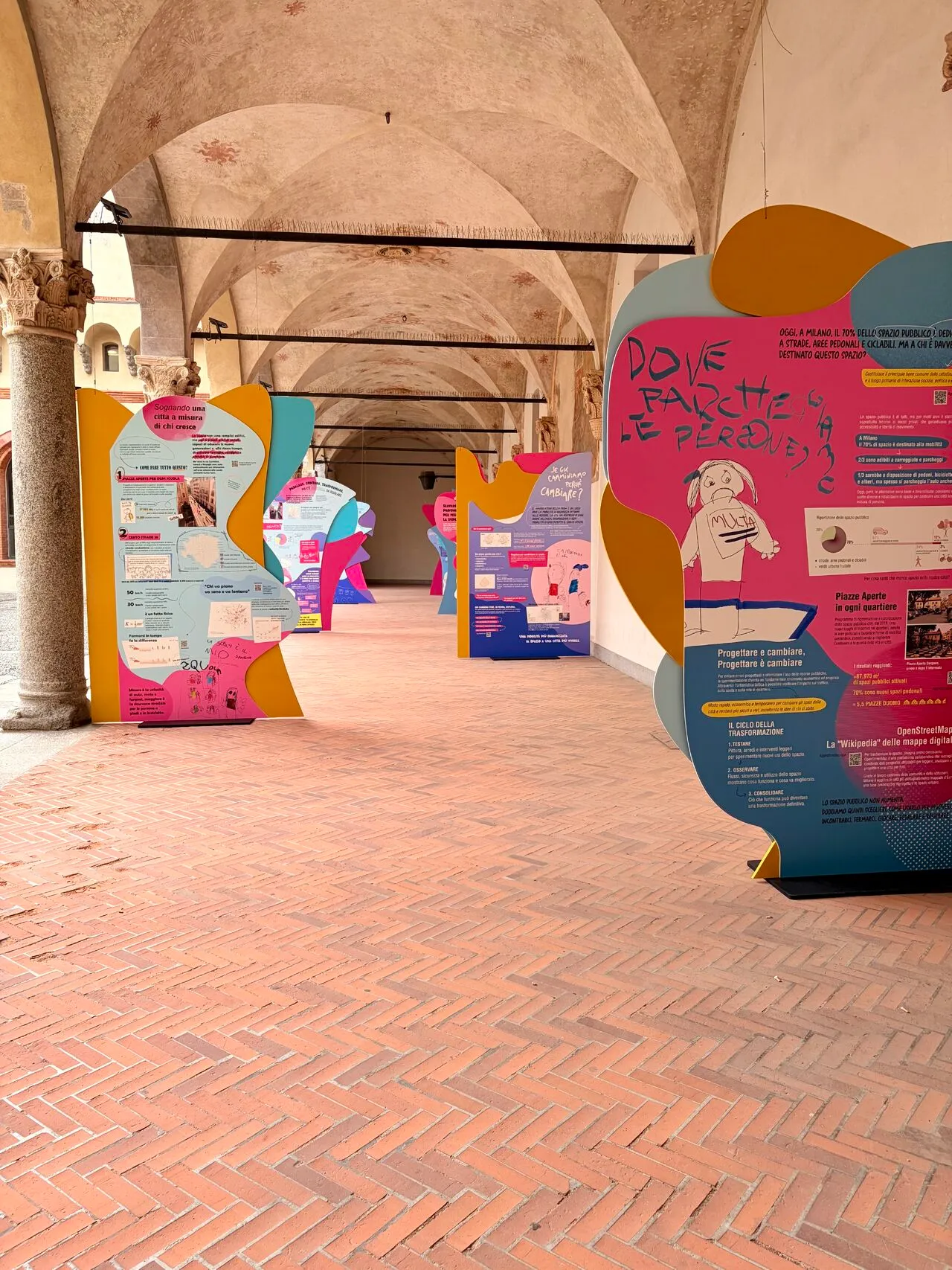
At Milan’s MOBIDAYS, Blimp shares how data helps identify where to act on urban...

In highly complex industrial plants, operational certainty is more than just an efficiency goal: it is a vital safeguard that ensures business continuity and worker safety. Traditionally, industrial maintenance has relied heavily on manual procedures, periodic inspections, and purely visual checks. However, field experience consistently shows that human monitoring errors remain a primary cause of sudden breakdowns, prolonged machine downtime, and operational accidents.
Leaving a tool behind in a sensitive area or missing a critical step during a complex inspection is not just a minor issue you can fix with a simple checklist. Especially in Safety-Critical sectors, such as aerospace, automotive, or energy, a single oversight creates an unacceptable risk, often known as FOD (Foreign Object Debris). In this context, industrial maintenance innovation requires a paradigm shift: we must evolve traditional physical assets and tools, transforming standard workstations into smart, interconnected nodes.
The classic approach to managing and maintaining machinery now shows clear scalability limits. Too often, maintenance is still viewed merely as a passive cost center on the balance sheet. In other cases, it is managed through basic planning software that lacks real-time visibility into what is actually happening on the production line. This heavy reliance on human attention and memory for tool verification creates inevitable operational bottlenecks and fails to ensure absolute traceability at the end of every shift.
To overcome these structural limits, simply digitizing paper manuals or replacing physical logbooks with tablets is not enough. We need a much deeper integration between intelligent algorithms and the physical world of production lines. We can only achieve a real leap forward in preventing plant downtime by equipping systems with the ability to accurately perceive their surroundings and act autonomously.
When addressing operational challenges across various industrial sectors, from complex precision manufacturing to automotive and advanced logistics, a universal need emerges: overcoming the historical inefficiencies of visual inspections. In numerous projects aimed at plant modernization and process innovation, the gradual adoption of cyber-physical architectures has drastically optimized tool traceability and actively supported operators in their daily tasks.
This approach aims to reduce the natural occurrence of human error by integrating networks of smart sensors that operate in the background, without adding to the staff’s cognitive load. Designing systems where asset quality and integrity checks are distributed and automated means building a continuous, objective, and structured data collection process. This is the absolute foundation of any advanced maintenance strategy.
The true frontier of innovation in this field lies in what we call Physical AI: bringing Artificial Intelligence directly into tangible devices and machinery. When faced with the concrete needs of partners in highly critical sectors, who needed to permanently overcome the limits of manual tool verification, we explored and implemented technological frameworks capable of proactively preventing the presence of foreign objects in sensitive areas and accelerating routine operational procedures.
We never build these solutions by forcing pre-packaged formulas. Instead, they stem from a careful analysis of the physical dynamics of each individual plant. Intelligence does not only reside in centralized software; it is distributed to the edges of the network in an edge computing logic, right where the mechanical action takes place.
Guiding plant innovation toward these new paradigms requires rigorous methodologies and technological choices. Through structured technical scouting, we can evaluate, select, and integrate the most suitable and high-performing technology for each specific operational context. A solid decision framework compares and combines several enabling technologies:
The ultimate goal is to define a tracking and monitoring ecosystem that is not only exceptionally robust technically but also fully sustainable economically.
The true added value in modern industrial maintenance is expressed through building a solid application model. The journey typically starts with an in-depth feasibility analysis, which then leads to a technological development roadmap tailored to the company’s reality. Formalizing requirements directly in the field is the crucial step to balance the effectiveness of engineering solutions with the overall economic efficiency of the project, an essential aspect closely linked to the logic of product innovation.
Adopting this structured methodological baseline greatly minimizes the risks associated with implementing new technologies and standardizes control procedures on a large scale. The historic transition from manual checking – subject to fatigue and distraction – to a fully sensorized architecture ensures immediate, precise and irrefutable traceability at the end of every activity.
The virtuous path of technological transition for industrial infrastructure and plants finds its highest expression in practical validation. Before starting a pervasive revolution across the entire production line, the most methodical approach always continues with the definition and grounding of a targeted Proof of Concept (PoC). This phase allows us to test automatic recognition logic, hardware resilience in harsh environments, and network infrastructure reliability directly in the field, safely paving the way for the subsequent scalable industrial prototype.
This continuous convergence between the physical world and the digital sphere represents the true essence of modern industry: the exact meeting point where the intelligence of algorithms merges with the concreteness of manufacturing, building safer systems and high-impact solutions.
👉 Discover how we support companies, industrial partners, and researchers in adopting advanced technologies to transform operations. Speak with our Innovation experts.