Rapid Prototyping: The Strategic Accelerator for Industrial Innovation
Discover how rapid prototyping and Physical AI reduce investment risks in product dev...

In today’s industrial landscape, product innovation is no longer just a competitive advantage; it is a basic requirement for survival. The discovery phase, which focuses on understanding the voice of the customer and identifying pain points, is the strategic foundation of any project. However, theoretical analysis alone cannot guarantee market scalability.
The transition from concept design to engineering necessarily requires empirical validation. Companies need tangible assets to determine whether a solution actually solves a critical issue, optimizes existing processes, or unexpectedly introduces inefficiencies. In this critical phase, moving from abstraction to physical reality, rapid prototyping emerges as an essential tool for de-risking and accelerating time-to-market.
The origin of modern rapid prototyping dates back to the 1980s when engineer Chuck Hull patented stereolithography. The invention came from a highly pragmatic industrial need: to drastically cut the time, often measured in months, required to test the tolerances and geometries of injection-molded plastic parts.
While the first wave of rapid prototyping was purely geometric and material-focused, today’s paradigm is much more complex. In technology-intensive sectors, a prototype is no longer just a static representation but a mechatronic system. The goal is not just to validate the shape, but the function, the hardware-software integration, and the economic feasibility on an industrial scale.
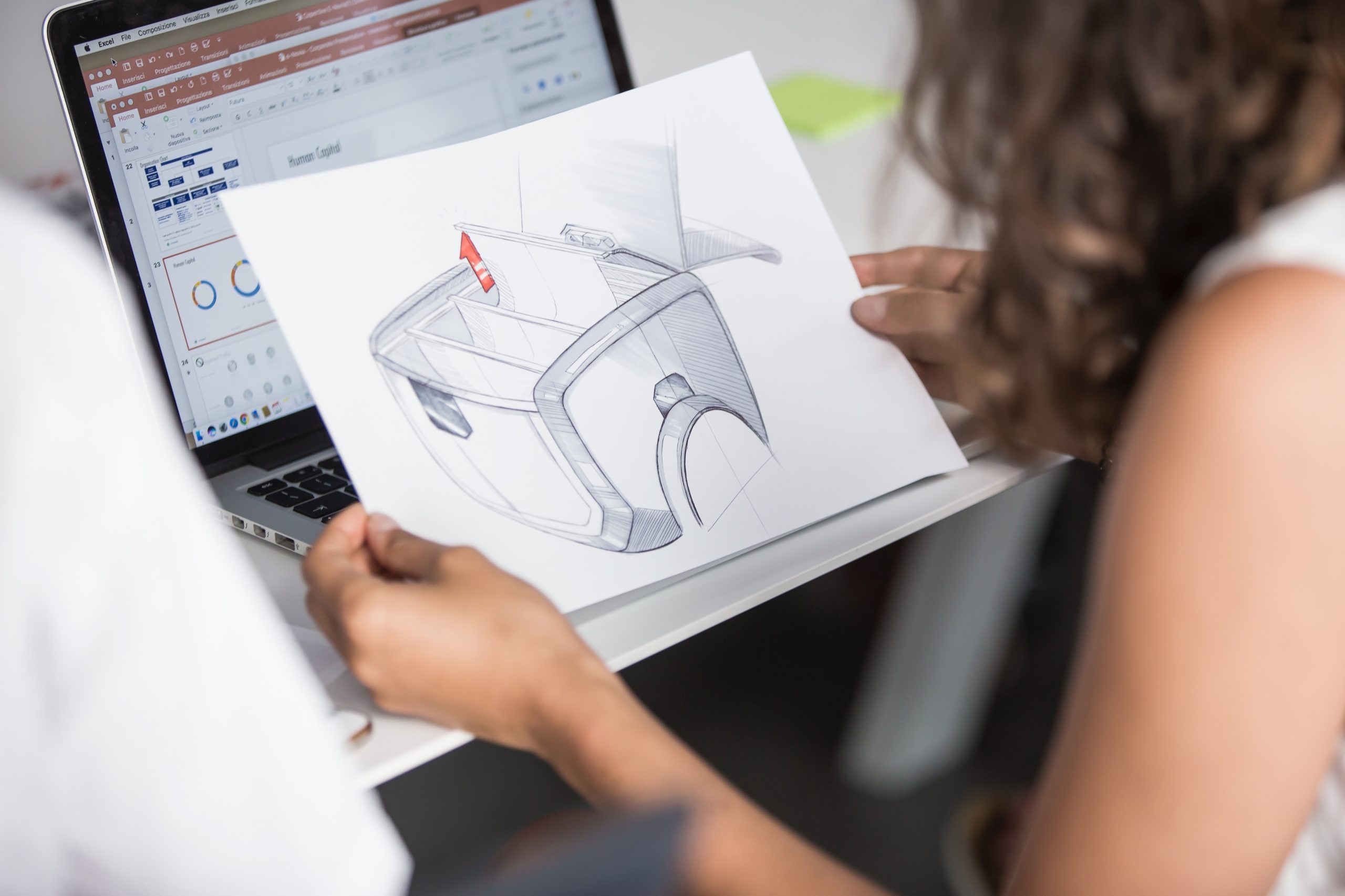
An effective corporate prototype is, by definition, an early version designed to test a specific hypothesis before allocating massive production budgets. Applying the principles of Design Thinking and strategic innovation (as theorized by MIT and Harvard Business School frameworks), the process relies on three operational pillars:
One of the main obstacles to product development is information asymmetry: making final decisions based on partial data. Rapid prototyping solves this problem by segmenting technological initiatives into three main categories, which help define the correct level of detail for a Proof of Concept (POC):
This iterative approach allows management to exercise real options on the project: scaling up investments when metrics are positive, or executing a pivot (strategy change) when the economic impact of modifications is still negligible.
Adopting a methodological approach based on rapid validation alters organizational dynamics. Historically, a product’s fatal flaw would emerge during the transition from R&D to the production line, turning into a significant financial loss (the “Execution Gap”).
Rapid prototyping forces these critical issues to surface in the very first weeks of design. Counter-intuitively, the fail fast principle leads to a drastic reduction in the Total Cost of Ownership of product development. By quickly discarding ineffective options, resources are focused on solutions with high return potential.
The outlined principles are especially critical in the Deep Tech context, where barriers to entry are dictated by the complex intersection of mechanics, electronics, and algorithms. An excellent example of methodological success is Weart, a company born and incubated within the e-Novia Venture Studio.
The wearable solutions developed by Weart digitize the sense of touch, allowing users to perceive physical or virtual objects distant in space and time. The goal is to redefine how users interact with digital content in their daily lives, enriching experiences across numerous applications, with a specific focus on entertainment, marketing, training, and content sharing.
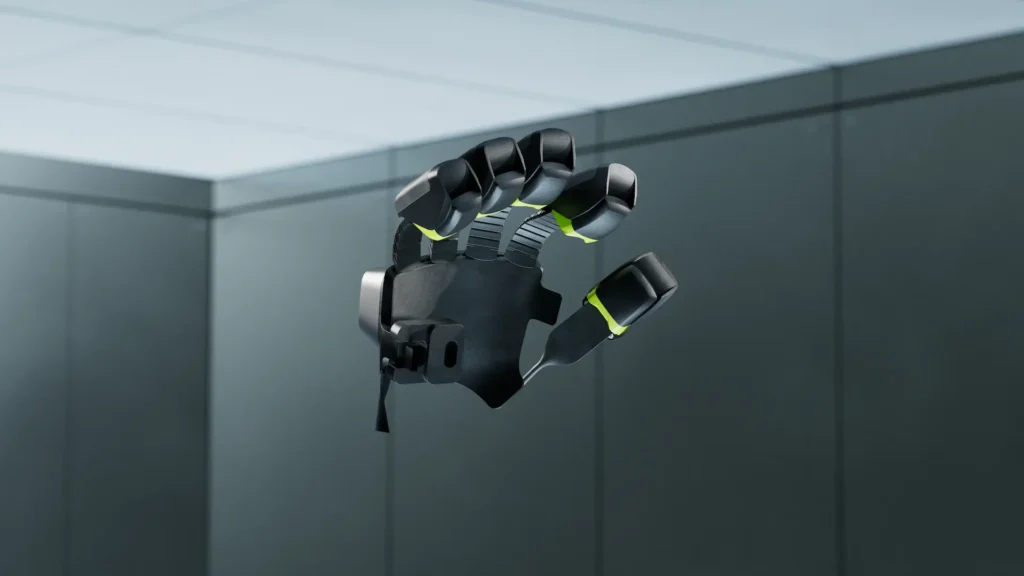
The company’s flagship product is the TouchDIVER Pro. It is the only VR haptic glove on the market capable of co-localizing on the fingertips the three fundamental stimuli that influence touch: force feedback, textures, and thermal cues. By making interaction with virtual objects feel as natural and realistic as the real thing, the device significantly accelerates learning curves and saves valuable corporate resources in VR training, prototyping, or art exploration scenarios.
Developing such a sophisticated hardware-software solution—equipped with an SDK for easy integration into platforms like Unity and Unreal Engine, and compatible with all major VR headsets on the market—represented an extreme engineering challenge.
The transition from academic research to market validation was made possible through intensive cycles of rapid prototyping. The team integrated the principles of Physical AI, applying artificial intelligence to cyber-physical systems. Successive Proof of Concepts allowed them to field-test the complex miniaturization of sensors and the efficiency of haptic algorithms. Validating these iterations in the real world ensured that Weart could turn an experimental architecture into a solid, scalable industrial product.
Transforming a validated prototype into a certified product ready for mass production requires a structured execution framework. Companies trying to bridge this gap internally often struggle with organizational rigidity or a lack of multidisciplinary skills.
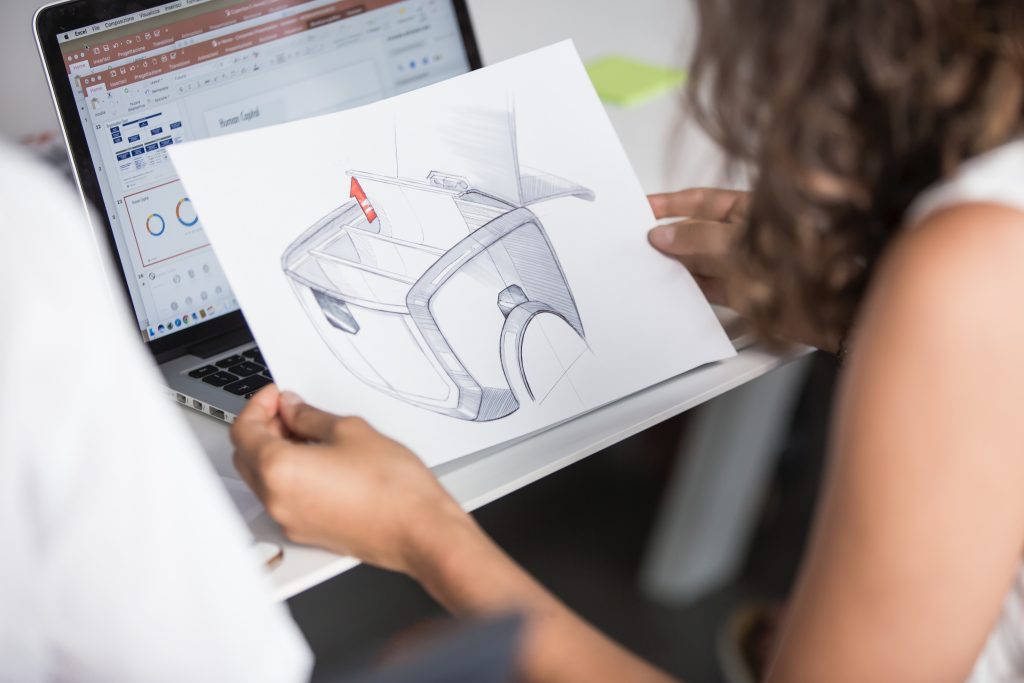
e-Novia acts as a strategic and operational partner, offering an Intelligence Infusion model that combines the agility of Venture Building with the rigor of industrial engineering. By combining excellence in Physical AI, mechatronics, and automation, we support management and R&D departments throughout the entire lifecycle: from architecture definition and POC creation to final industrialization.
If your organization’s priority is to accelerate time-to-market while reducing the risk profile of R&D investments, explore our services for product innovation and discover how to translate technological potential into market leadership.