Process innovation: how to transform industrial production in 2026
For decision-makers and plant managers, process innovation represents the fundamental strategic asset to ensure the long-term competitiveness a...

In today’s industrial environment, maintenance can no longer be treated as a function separate from asset management. It directly affects production continuity, plant safety and the quality of operational decisions. For many organizations, it is one of the areas where the effective use of data can have an immediate impact on industrial performance.
Over the past few years, predictive maintenance has received increasing attention. Sensors, digital platforms and data analytics tools now make it possible to continuously observe how machines behave and detect early signs of deterioration before they develop into failures.
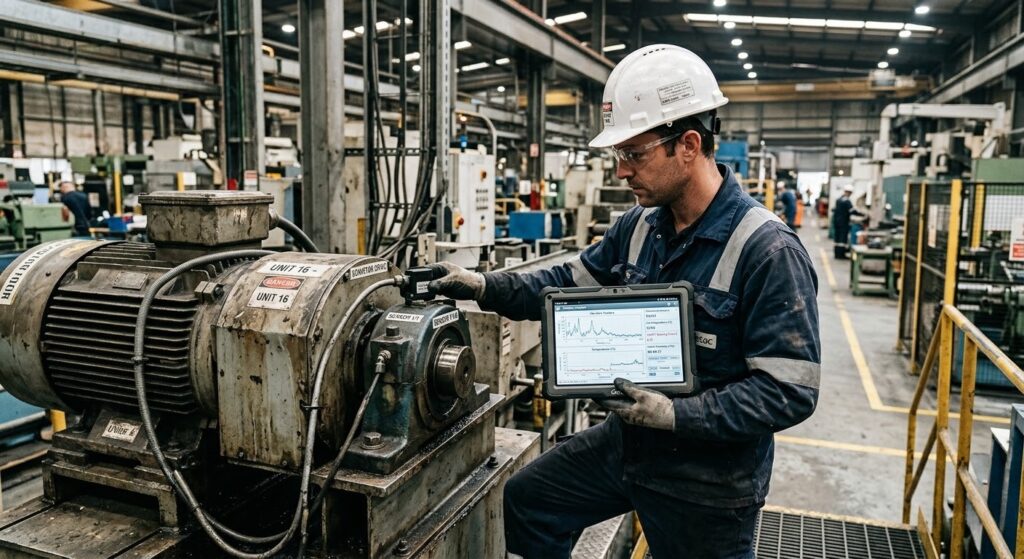
The real issue, however, is not the amount of data being collected. In many industrial settings, data already exists but has little impact on operational decisions. The real shift occurs when information generated by assets becomes a practical basis for deciding when to intervene, where to focus attention, and how to reduce the risk of unplanned downtime.
When this transition happens, maintenance stops being a reaction to problems that have already occurred and becomes an integral part of plant management.
For many years, industrial maintenance has relied on two main approaches.
The first is reactive maintenance. Intervention takes place only after a failure occurs. While this method is simple to manage, it exposes organizations to unexpected production interruptions and costs that are difficult to predict.
The second is preventive maintenance. Interventions are scheduled according to fixed time intervals or machine usage cycles. This approach reduces the likelihood of sudden failures but introduces other inefficiencies. Some components are replaced while they are still fully functional, while others may degrade before the scheduled maintenance takes place.
Predictive maintenance introduces a different principle. Decisions are no longer based on a calendar but on the actual condition of the asset.
By continuously monitoring operational variables, it becomes possible to observe how the condition of a component evolves over time. When abnormal signals appear, maintenance activities can be scheduled before a failure occurs.
In this way, maintenance becomes more closely aligned with operational management and contributes directly to production stability.
A predictive maintenance initiative connects three essential elements.
The first is observing machine behavior through sensors installed on industrial assets.
The second is analyzing the information collected over time.
The third is using these insights to support operational maintenance decisions.
The third element is the decisive one. Monitoring machines and collecting data does not automatically generate value. Value appears when information becomes a practical reference for deciding when to intervene, which components require attention, and how maintenance priorities should be defined.
For this reason, predictive maintenance projects require a combination of capabilities. Organizations must understand how components degrade, integrate data acquisition systems with digital platforms, and interpret the collected data within the operational context of the plant.
When these conditions are in place, predictive maintenance becomes a practical tool for improving asset reliability.
Pilot projects focused on predictive maintenance are increasingly common across the industrial sector. Many of them demonstrate promising technical results. The real challenge arises when organizations attempt to move from experimentation to stable operational use.
The gap between these two stages is often wider than expected.
One important factor is the selection of assets to monitor. Not every machine has the same impact on production continuity. Identifying critical assets allows organizations to focus efforts where the benefits are most visible.
Another factor concerns the choice of variables to monitor. Sensors and collected data must correspond to the degradation mechanisms being studied. Installing a large number of sensors does not necessarily improve the quality of analysis if the measurements themselves are not relevant.
A third aspect involves integration with operational processes. Analytical results must translate into actionable guidance for maintenance teams. When insights remain isolated within monitoring systems, they fail to change how plants are actually managed.
Finally, the technological architecture must be scalable. A pilot project only makes sense if it can later be extended to additional assets or facilities without starting from scratch.
Several technological developments have made predictive maintenance easier to implement in recent years.
Industrial sensors now make it possible to continuously monitor variables such as vibration, temperature, mechanical load, and environmental conditions.
Data management platforms allow information from different machines and systems to be collected and integrated.
Advanced analytics tools make it possible to detect anomalies and estimate how the condition of components may evolve over time.
When these technologies are properly integrated, organizations can observe asset behavior continuously and identify conditions that require attention before they become operational problems.
In predictive maintenance initiatives, the main challenge is not simply collecting data but making it accessible, interpretable, and usable within operational workflows.
This is where Think.Link, the IoT and AI-ready platform developed by e-Novia, plays a key role. Think.Link connects sensors, industrial devices, and enterprise systems into a unified environment where asset data can be collected, integrated, and analyzed.
The platform enables device management, data integration from industrial equipment, real-time analysis, and visualization tools that support operational decision making.
In this way, asset monitoring moves beyond purely technical diagnostics and becomes a source of actionable information for those responsible for managing plant operations.
A practical example of this approach can be seen in the Tokbo project, developed by e-Novia together with Agrati.
In this initiative, e-Novia contributed to the evolution of a traditional mechanical component into a data-enabled solution designed to support infrastructure management.
Tokbo introduces sensor-equipped bolts designed to monitor the structural conditions of industrial assets and infrastructure.
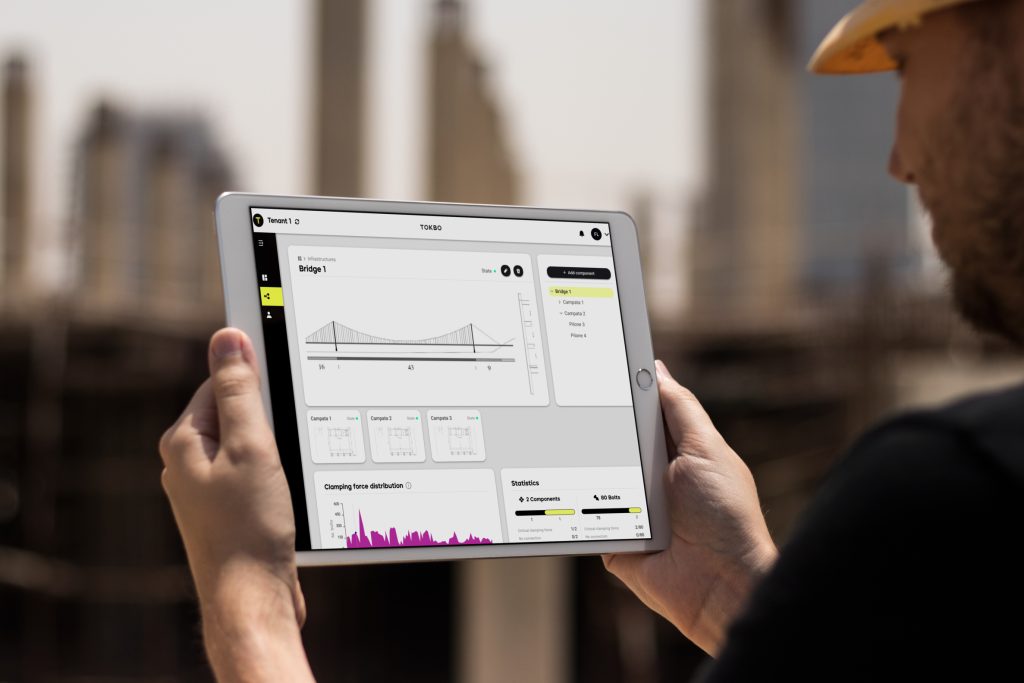
The system integrates hardware installed in the field, communication devices for secure data transmission, and a digital platform used to analyze the collected information.
Through this architecture, parameters such as tightening force, vibration, and temperature can be monitored continuously, making it possible to detect anomalies and support predictive maintenance activities.
In this way, a conventional mechanical component extends its value beyond its physical function and becomes a source of information that supports asset management.
Predictive maintenance changes the relationship between data and operational management.
Continuous monitoring allows organizations to detect early signs of degradation before they develop into operational issues and enables maintenance activities to be planned with greater accuracy.
Achieving meaningful results requires combining asset expertise, technology integration, and the ability to interpret data within the real operational environment of the plant.
When these elements come together, predictive maintenance becomes a practical instrument for improving asset reliability and supporting more informed industrial decision making.