Process innovation: how to transform industrial production in 2026
For decision-makers and plant managers, process innovation represents the fundamental strategic asset to ensure the long-term competitiveness a...

For decision-makers and plant managers, process innovation represents the fundamental strategic asset to ensure the long-term competitiveness and resilience of industrial production. Optimizing production lines today no longer means simply applying traditional Lean Production principles or purchasing marginally faster machinery to chase inefficiencies. Instead, it requires an evolutionary leap: the profound convergence between historical manufacturing domain knowledge and the application of advanced technologies directly on the shop floor.
Historically, management textbooks defined process innovation as the implementation of a new or significantly improved production or delivery method, aimed at reducing unit costs and increasing quality. In traditional industry, this often translated into physically reorganizing workstations to reduce cycle times or automating purely repetitive tasks.
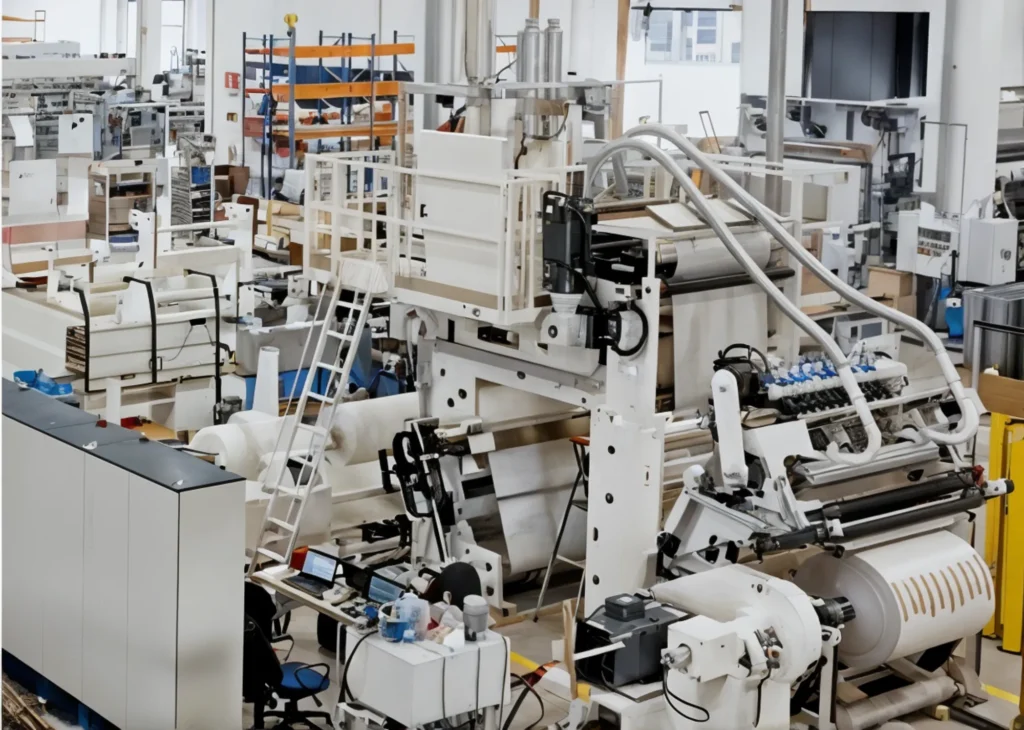
In 2026, however, the true challenge of process innovation has shifted from the purely mechanical realm to the cognitive, predictive, and interconnected sphere. Manufacturing Process Innovation (MPI) intervenes not only in how physical actions are executed, but in how machines and systems make real-time decisions in response to unforeseen variables. It means radically transforming the flexibility and reliability of industrial operations, moving from a reactive approach to a proactive one, capable of protecting the business from external changes.
To understand the urgency of investing in real process innovation, it is crucial to analyze structural market data. The Italian productive fabric, for example, is composed for 94.8% of micro and small enterprises that employ less than half of the total workforce. At the opposite extreme, large international groups, representing only 0.1% of companies, generate approximately 35% of the value added (Istat Data).
This divide is dramatically reflected in Research and Development (R&D) statistics. Currently, multinational groups concentrate a staggering 83.1% of corporate R&D spending in Italy. This means that a massive portion of the capacity to develop formal process innovation is confined within global networks. Simultaneously, the overall intensity of national research struggles to keep pace, stagnating around 1.37% of GDP compared to the EU’s 2.24% (Eurostat Data).
To remain globally competitive, SMEs and mid-cap companies must find ways to democratize access to factory intelligence, bridging the gap between collected data, often trapped in departmental silos, and decisions made on the production line.
The need to implement structured process innovation is not driven solely by internal efficiency metrics, but by macroeconomic pressures. Geopolitical tensions, climate changes altering trade routes, and the fragmentation of global logistics networks make it highly probable that the frequency and severity of shocks hitting industrial manufacturers will continue to grow in the coming decades.
Companies operating in heavy manufacturing and component production try to mitigate these risks by evaluating nearshoring (bringing production back to closer geographical areas). However, reshoring production to countries with higher labor costs is only sustainable if supported by extremely high-value-added automation and processes.
Industry analyses show that, within the industrial market, companies with revenues under 2 billion dollars are struggling immensely: over the past ten years, the value created by these smaller entities has accumulated a 41% lag compared to larger competitors. A solid process innovation strategy thus becomes the great equalizer: the vital tool enabling even mid-sized companies to push the frontiers of manufacturing performance, ensuring profitability even in the most adverse contexts.
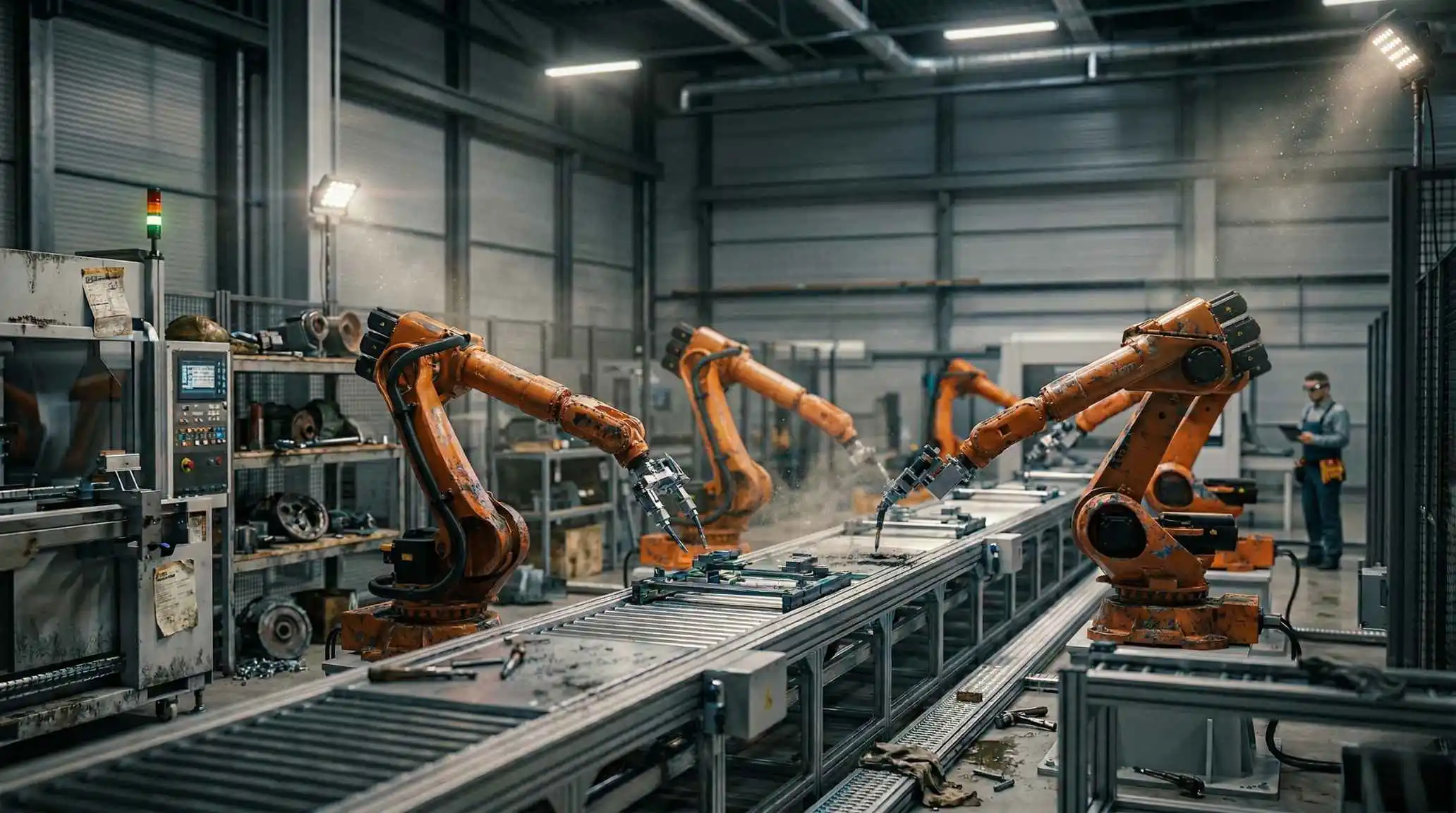
Confining digital innovation solely to ERP software or the automation of administrative procedures severely limits its impact on the core manufacturing business. The true revolution happens when technology touches the metal, the plastics, and the components being processed.
Process innovation supported by Physical AI relies on integrating neural networks, physical models, and advanced sensor technology directly into the harshest production environments. The goal is not to replace human operators, but to equip them with intelligent “Co-Pilots,” capable of analyzing variables impossible to track with the naked eye or traditional tools.
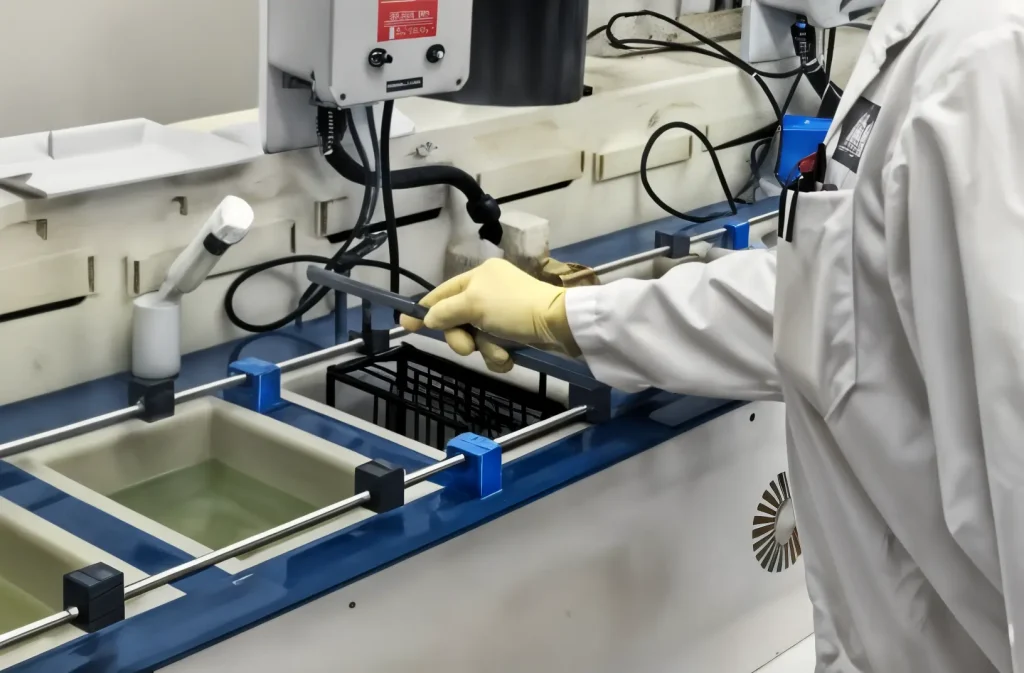
A concrete example of this approach is what we at e-Novia call Experiment Forecasting. In many industrial contexts, testing the deterioration of new components or materials requires weeks or even months in thermal and mechanical stress cells. By training predictive algorithms on complex chemical and physical datasets, systems can be created to anticipate a formulation’s failure within the very first hours of testing. This intelligent “kill switch” promptly halts tests on prototypes destined to fail requirements, freeing up resources, drastically cutting operating costs, and accelerating time-to-market.
One of the most common traps when introducing new technologies is the belief that a powerful algorithm is, on its own, enough to generate value. In the reality of a manufacturing plant, process innovation is only successful if it is naturally adopted by the people overseeing the machines.
In a factory environment dominated by noise, vibrations, and the need to maintain strict cycle times, the operator cannot afford distractions. Installing clunky software or complex dashboards that force the shift supervisor to step away from the line to decipher production trends generates massive cognitive friction. If technology interrupts the natural physical workflow, it has failed its mission.
For process optimization to be real, the interface between operator and machine must be invisible and frictionless. A Co-Pilot based on Physical AI should not provide raw data, but timely operational recommendations: for example, autonomously suggesting the recalibration of a press before it generates scrap, or flagging the anomalous wear of a tool without requiring the manual interpretation of complex charts.
Transforming production methodologies requires engineering rigor and a clear adoption roadmap. Here are the fundamental phases:
Developing advanced solutions for process innovation requires a profound hybridization of traditional manufacturing expertise, mechatronic engineering, and data science.
Our methodological approach combines industrial experience with the potential of Physical AI, partnering with companies to design intelligent architectures capable of identifying drifts in real time, optimizing consumption, and maximizing the Overall Equipment Effectiveness (OEE) of plants. We guide companies beyond a purely theoretical approach, implementing concrete solutions that protect operating margins and strengthen business solidity.