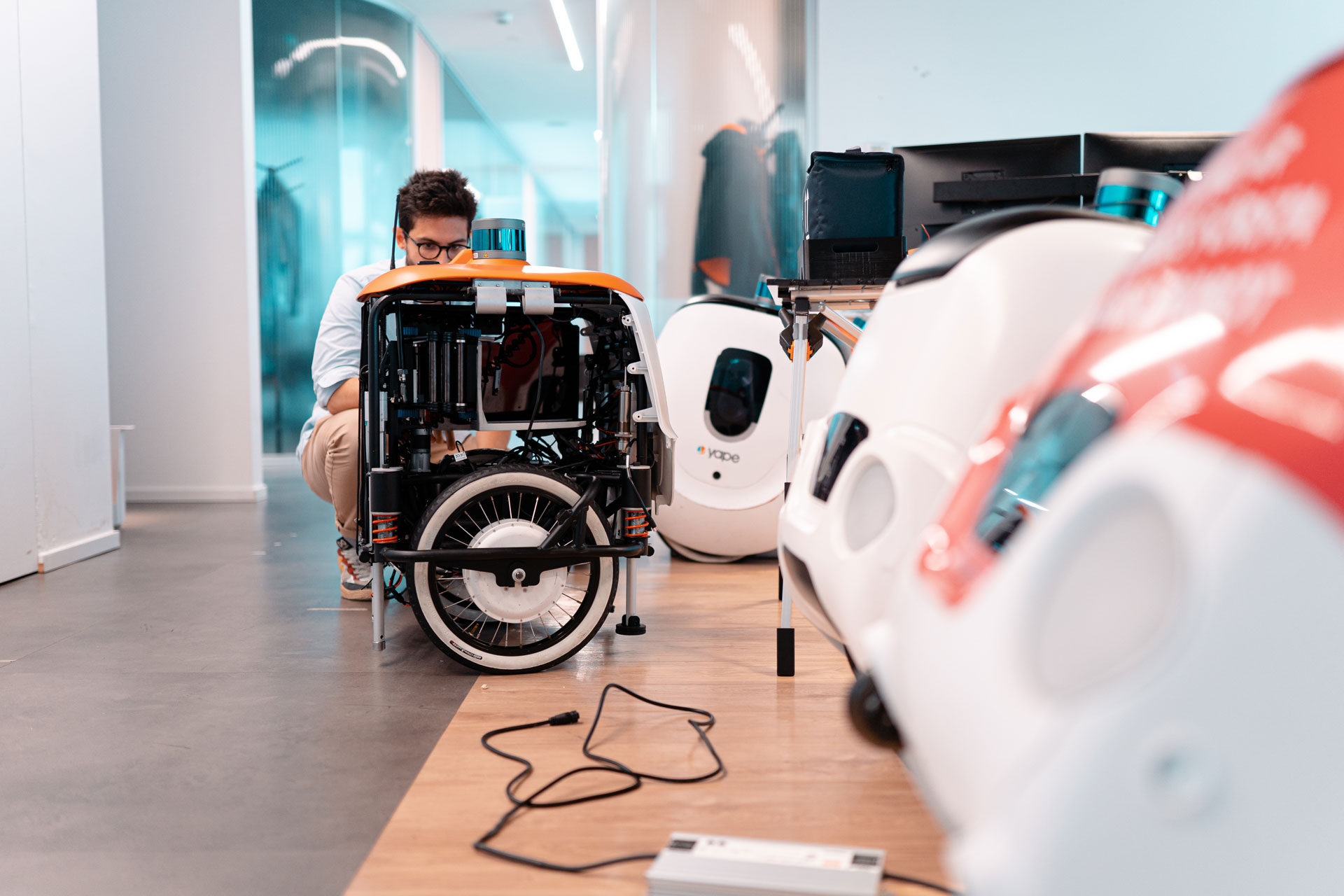
Rapid Prototyping: The Strategic Accelerator for Industrial Innovation
Discover how rapid prototyping and Physical AI reduce investment risks in product dev...

The key difference between an incubator and a venture studio is simple: an incubator supports already-formed startups through services, mentoring, workspace and networks, while a venture studio originates and co-founds new startups from day one—deploying operational resources (team, method, product development, go-to-market) and sharing responsibility and risk more directly.
This is not “just semantics”. It determines who makes decisions, who contributes execution capability, and who remains accountable when innovation meets real market constraints.
In innovation conversations, “incubator” and “venture studio” are often used interchangeably. In practice, the difference is material: it changes the role within the entrepreneurial journey, the operating scope, the equity logic, and—most importantly—how execution risk is managed.
For founders, corporates, and ecosystem stakeholders (universities, research centers, investors), understanding the difference between an incubator and a venture studio means choosing the model that fits both the stage of the initiative and the complexity of the challenge: validation and structuring on one side; building and co-founding on the other.
An incubator is designed to create favorable conditions for early-stage startups: access to entrepreneurial skills, mentoring, shared services, relationships, and sometimes infrastructure and workspace. Its primary value is enablement: it reduces information gaps and accelerates the team’s learning curve.
What to expect from an incubator

When to choose an incubator
In an incubator model, responsibility for execution (product, team, sales, delivery) remains primarily with the founders. The incubator improves the environment around the startup, but it typically does not step into company-building as an operating co-founder.
A venture studio (also referred to as a startup studio or venture builder) is a venture-building model designed to create multiple startups over time through repeatable mechanisms: opportunity generation or co-generation, validation, team formation, product development, commercial launch, and scaling.
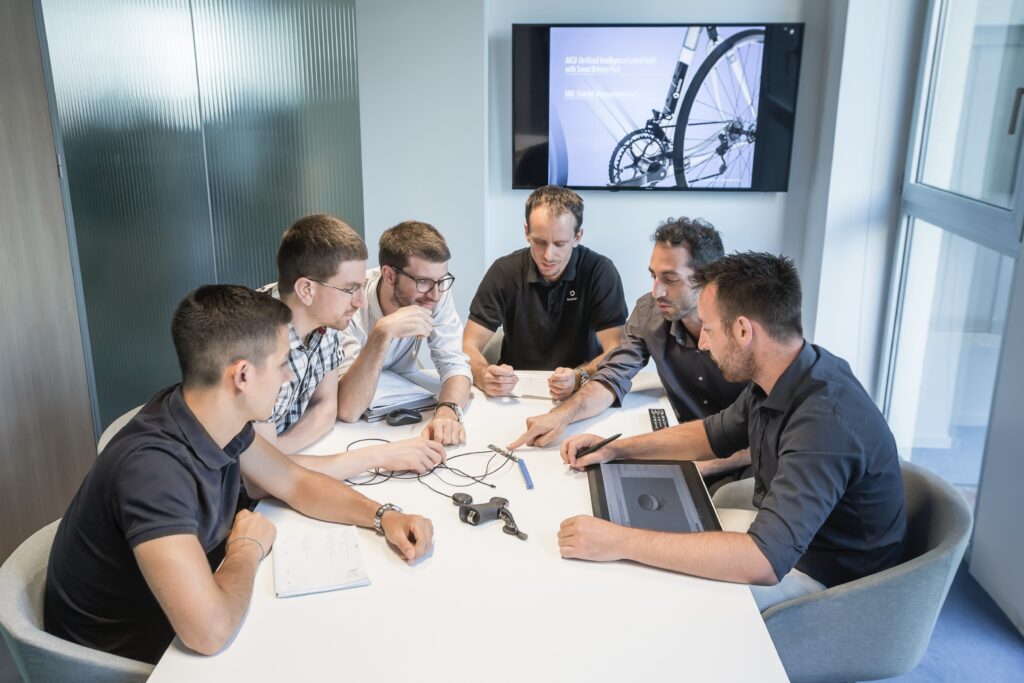
Here the difference between an incubator and a venture studio becomes clear: the studio doesn’t simply “support” external initiatives—it operates as a co-founder, bringing operational capability to turn an idea into a fundable and scalable company.
Below is a practical comparison that makes the difference immediately actionable.
1) Relationship: enablement vs operating partnership
A useful way to describe the difference is:
In the second case, the intensity of contribution is typically higher because the studio takes responsibility for deliverables and timelines.
2) Where ideas come from—and how selection works
This impacts both speed (from idea to decision) and how suitable the model is for complex initiatives.
3) Execution risk: who carries it—and who governs it
This is where the difference becomes decisive. Execution risk isn’t only “not finding customers”. It includes the risk of failing to:
In an incubator model, this risk largely sits with the founding team. In a venture studio model, a meaningful share of that risk is absorbed by the operating model itself—because the studio invests resources and capabilities directly into execution.
4) Equity: not just ownership, but responsibility
Equity is often the most visible topic, but it needs the right interpretation: in a venture studio, equity is typically linked to responsibility and operational contribution (co-founding, development, organization, go-to-market).
Incubators may or may not take equity (it depends on the program), but the differentiator is not the percentage—it is the degree of integration in company-building.
5) Governance and decision rights (the dimension many comparisons miss)
In corporate and deep-tech contexts, governance can be more important than mentoring. Clarifying the difference means asking:
In an incubator model, support is largely external: even when the contribution is valuable, the incubator typically does not take part in decision rights around roadmap, key hires, or budget allocation.
In a venture studio model, the studio acts as a co-founder: it invests capital and operational resources (team, expertise, time) and holds equity in the venture. This creates strong incentive alignment—the studio has a direct stake in the startup’s success—and therefore tends to take a more structured role in governance, sharing decisions and accountability for execution.
To make the difference more tangible, one example helps.
Blubrake is one of the companies developed and grown within the e-Novia Venture Studio through a venture-building approach. In this model, value does not come only from access to services or networks, but from the ability to put execution capability on the table: engineering expertise, mechatronic systems know-how, and integration work to turn a real market need into an adoptable solution.

In the light electric mobility segment, the need was clear: improve safety and braking control across variable surfaces—without compromising vehicle design and integration. With e-Novia’s support, Blubrake developed an ABS solution for e-bikes and light electric vehicles focused on stability, control, and integration—an effort that typically requires not only R&D, but also product engineering and readiness for industrial scaling.
In Blubrake’s case, the full path typical of a venture-studio-built company played out: from ideation and engineering through market adoption, industrial growth, and the opening of the cap table to external investors.
As a signal of maturity, in 2025 Blubrake extended its fundraising, bringing the round to €14.5 million total (including an additional €2.5 million tranche led by Suprajit and Primo Capital). In the same year, e-Novia completed its cycle with the sale of its stake (exit) in Blubrake.
In domains such as Physical AI—where intelligence is embedded into physical systems and acts on the real world through sensors and actuators—the distance between prototype and industrial application is often the real bottleneck. Here the difference between an incubator and a venture studio is not marginal: many initiatives don’t fail because they lack ideas, but because they lack the execution capability required to bring complex technology to market.
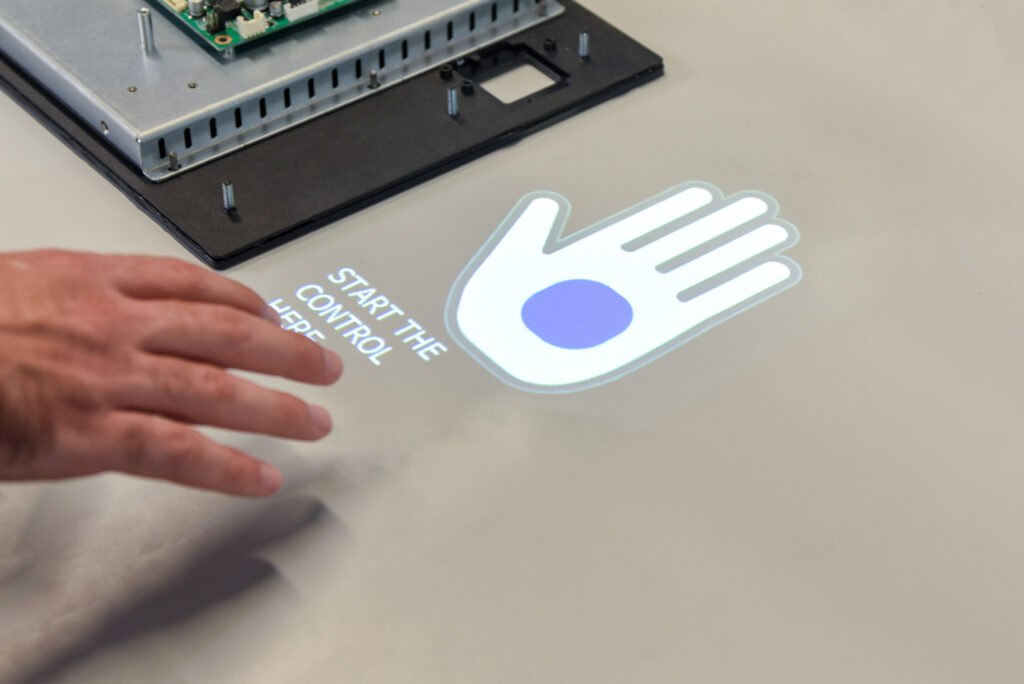
At e-Novia, this is often described as the need to cover the full journey from concept to production—organizing skills and resources to move innovation from early design through industrialization support.
In this context, a venture studio acts as a bridge between research, industry, and market, reducing execution risk through multidisciplinary teams and an integrated ecosystem.
The decision is not about which model is “better” overall—it depends on what your initiative needs right now. Incubators and venture studios serve different purposes and take on different responsibilities.
The first question is straightforward: does the startup already exist? If a team is already formed, the project is underway, and there is an initial product direction, an incubator (or in some cases an accelerator) can be the most coherent option to strengthen method, relationships, and the team’s ability to execute. If the initiative is still at day one, a venture studio may be a better fit, because it is designed to co-found—not just to support.
Next, identify the primary bottleneck. If the main challenge is clarifying the business model, validating assumptions, building entrepreneurial capability, and accessing a strong network, incubators are often effective—they reduce friction and accelerate learning. If the constraint is execution—building a complete team, engineering the product, preparing for industrialization—a venture studio is more appropriate because it deploys operating resources, not only advice.
Then consider technical threshold. When technology is complex and integrated (cyber-physical systems, hardware–software, embedded components, safety and reliability requirements), the risk is not only “finding customers”. It is building an adoptable, scalable product. In those contexts, a model that shares responsibility and operating capability—like a venture studio—often provides a structural advantage, because it reduces the gap between prototype and real-world application.
Finally, consider governance: how much external support is enough, and how much co-founding is required. If the initiative needs orientation and facilitation, an incubator may be sufficient. If shared decisions are required around roadmap, key hires, budget and priorities, a venture studio is typically more coherent: because it invests resources and often holds equity, it has a direct incentive to build the conditions for success and to share accountability for execution.
In short, the difference becomes operational when you stop asking “what services do they offer?” and start asking: who builds, with what resources, and with what level of responsibility?
What is the difference between an incubator and a venture studio?
An incubator supports startups that already exist through services, mentoring and networks, while a venture studio originates and co-founds startups from day one, deploying operating resources and sharing responsibility and execution risk more directly.
Do incubators take equity?
It depends on the program. Some incubators operate without equity; others may charge fees or include instruments that can involve ownership. The key differentiator remains the involvement model: external support (incubator) versus operational co-building (venture studio).
What is a startup studio?
A startup studio (venture studio/venture builder) is an organization that creates startups over time through a structured company-building model: ideation or co-ideation, validation, team building, product development, and go-to-market launch.
Explore how e-Novia supports companies and researchers in adopting Physical AI technologies, with an execution-driven approach from idea to industrialization.