Technological Innovation and Operational Overload: Transforming Intuition into a Strategic Asset
“I have this idea, but I never have the time to explore it.”
This remark is frequently heard within the C-suite and R&D depa...

The evolution of contemporary marketing strategies is leading to a progressive blurring of the boundaries between digital space and the physical environment. In this context, Physical AI applications in marketing no longer represent just technological experimentation, but a new infrastructure capable of making a brand’s presence on the territory dynamic, programmable, and, above all, measurable.
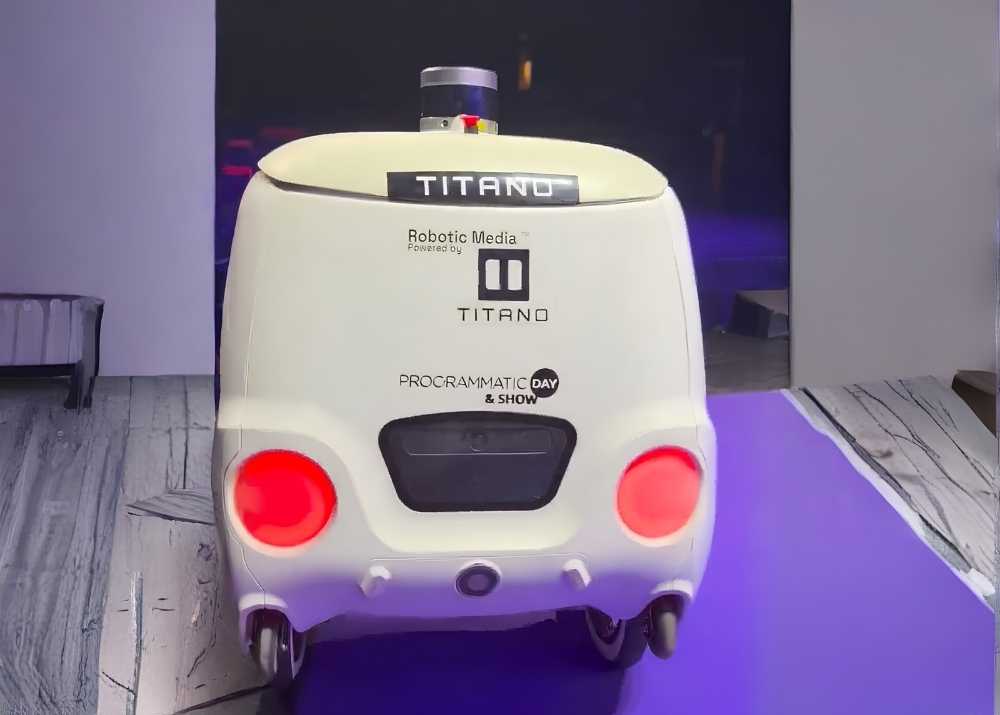
The recent case presented at Programmatic Day, which featured YAPE, an e-Novia Group company, demonstrates how autonomous robotics is transforming the concept of advertising asset: from static support to intelligent traveling media.
Until today, physical marketing (OOH – Out Of Home) has been limited by intrinsic staticity and a chronic difficulty in collecting granular data in real time. The integration of Physical AI applications in marketing allows overcoming these limits, inserting autonomous physical objects within the same digital advertising planning workflows.
It is not just about moving a message from a fixed screen to a mobile one, but about enabling an “agentic presence” capable of activating targeted content based on the context, position, and surrounding audience, bringing the effectiveness of programmatic directly onto the streets.
The technology at the base of this evolution is YAPE’s autonomous driving. Already successfully validated in last-mile delivery and off-highway industrial contexts, YAPE’s platform was chosen by Titano as an excellence demonstrator asset to transform a robot into a true dynamic and traveling advertising space.
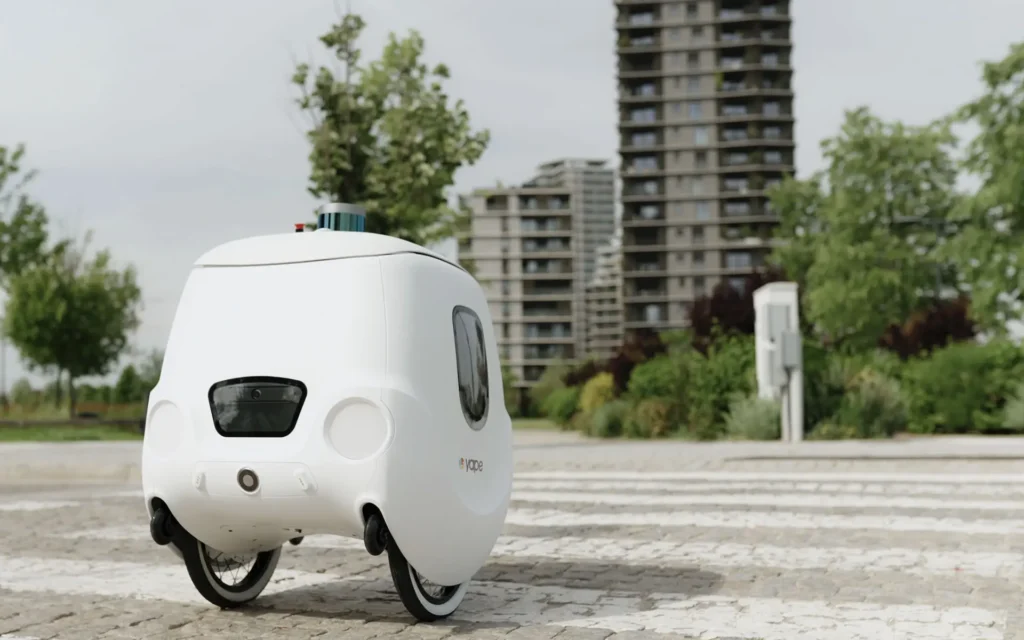
Thanks to the ability to navigate safely and independently in complex environments, the robot ceases to be a mere logistical vehicle. Through the technical infrastructure of partners, these robots enter planning workflows as nodes of a programmable media network, capable of moving strategically where the audience is most relevant.
A medium, to be defined as such in a professional context, requires reliable data. In this sense, a key role is played by Blimp, an e-Novia Group company specializing in headcount technologies and audience analysis in physical space through Computer Vision.

Measurement occurs through edge devices, such as the Head-Counter, which use face detection algorithms. It is essential to emphasize that the system detects the presence of a human face to categorize the audience but does not identify it in any way. The integration of Blimp solutions guarantees:
The adoption of Physical AI solutions allows brands to build true omnichannel marketing. The consumer’s transition from visual contact with a media robot to digital interaction on their smartphone occurs in a fluid way, eliminating frictions between offline and online.
For businesses, this means being able to govern the territory with unprecedented flexibility, adapting campaigns in real time based on environmental variables or crowd levels, ensuring brand positioning that is more coherent and impactful than traditional channels.
The joint YAPE and Blimp case perfectly exemplifies e-Novia’s vision. In a market driven by physical-digital convergence, products transform into intelligent systems by integrating AI, sensorics, and embedded technologies.
Operating as a Venture Studio and strategic partner for innovation, e-Novia intercepts this trend. Where artificial intelligence meets mechanics and physical space, we support businesses in outsourcing and accelerating innovation, transforming deep tech technologies into competitive advantages and new market-ready business models.